
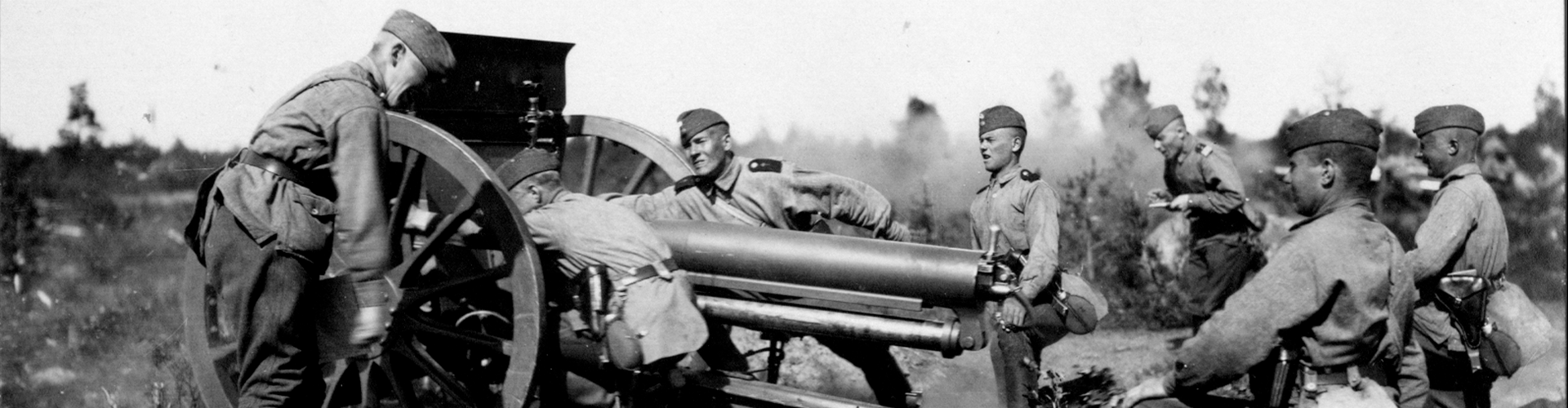
The Artillery School, which moved to Lappeenranta in May 1918, was tasked with assembling and demobilising artillery during the Civil war. The artillery equipment transported to the city was stored. Work was also started in Lappeenranta to establish peacetime artillery and train its officers. In the summer of 1918, the school was renamed the Finnish Artillery School.
The strong Swedish role in the Finnish artillery came to an end when the Germans took over responsibility for the formation of the Finnish artillery in June 1918. The artillery commander of the German Baltic Division, Major Hans Butz, drew up a plan to establish three field artillery regiments, a heavy battery and a mountain artillery battery. However, the formation of the forces was delayed because the artillery was not allocated the necessary number of conscripts and there were not enough horses. It was not possible to establish all the troops in sufficient numbers.
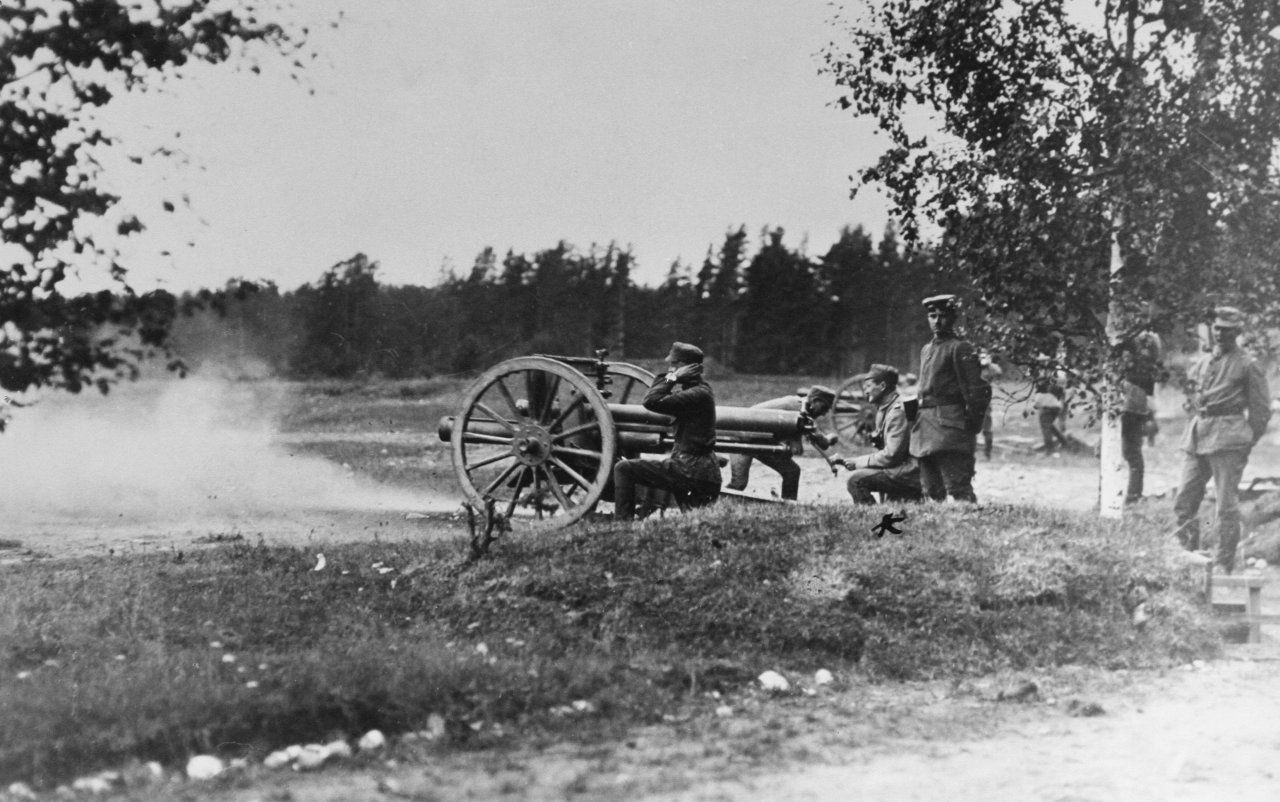
Artillery School drills in Lappeenranta in summer 1918.
The field artillery underwent many organisational changes between 1919 and 1933, and the number of artillery units and peacetime strength varied. There were also many internal changes within the divisions, as the development of firing methods required different configurations. Artillery battalions of the regiments also had to be constantly moved to different locations due to a lack of barracks space. The artillery was mainly Russian and horse-drawn. The main gun was the Russian 76 K 02.
Personnel transfers resulting from the changeover to the areal system in 1934 forced the field artillery regiments to reduce their peacetime formations to a single battery, a communications battery and a NCO school. The number of artillery units in relation to the infantry was considerably reduced.
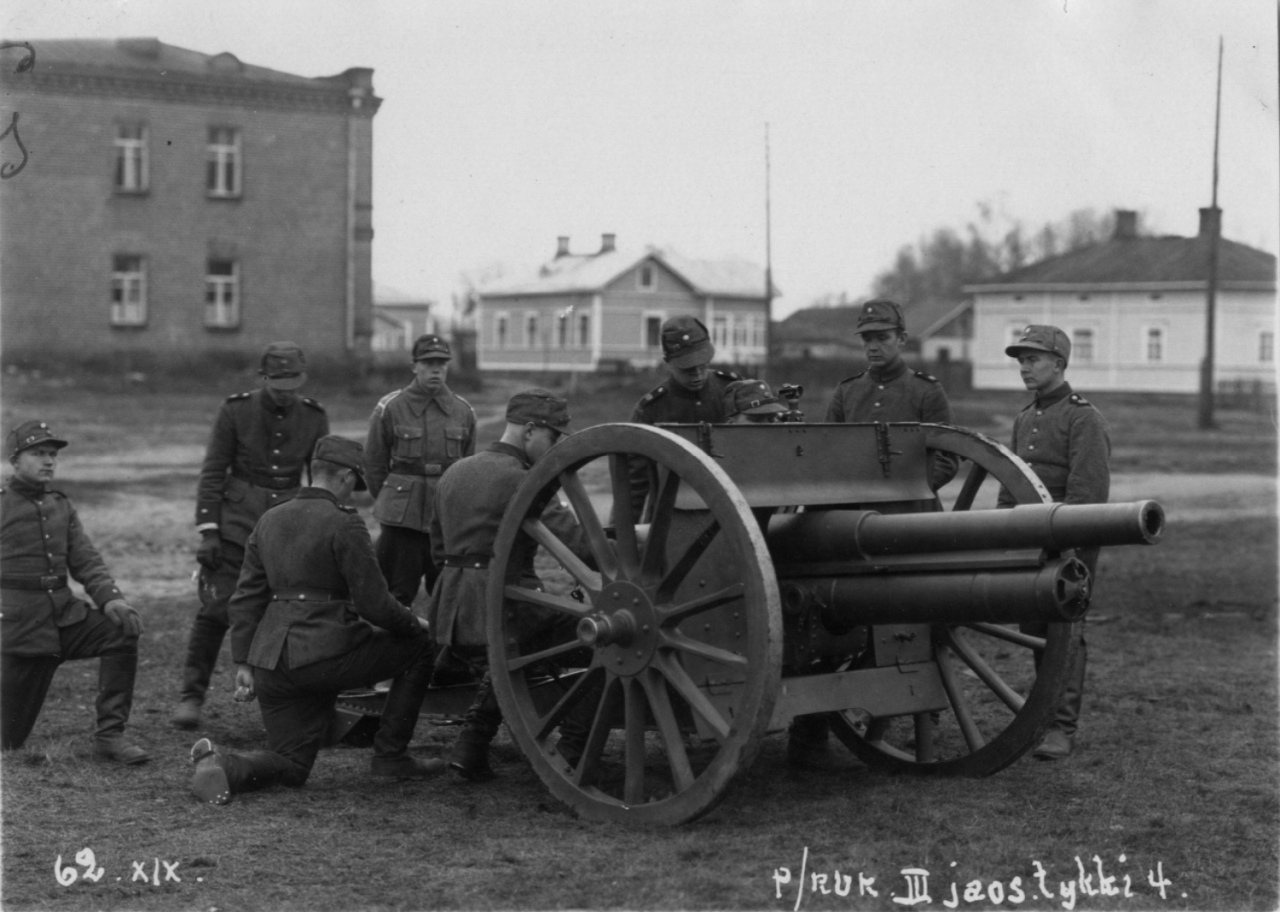
76 K 02 was the main gun model of the Finnish Artillery during 1920s and 1930s.