
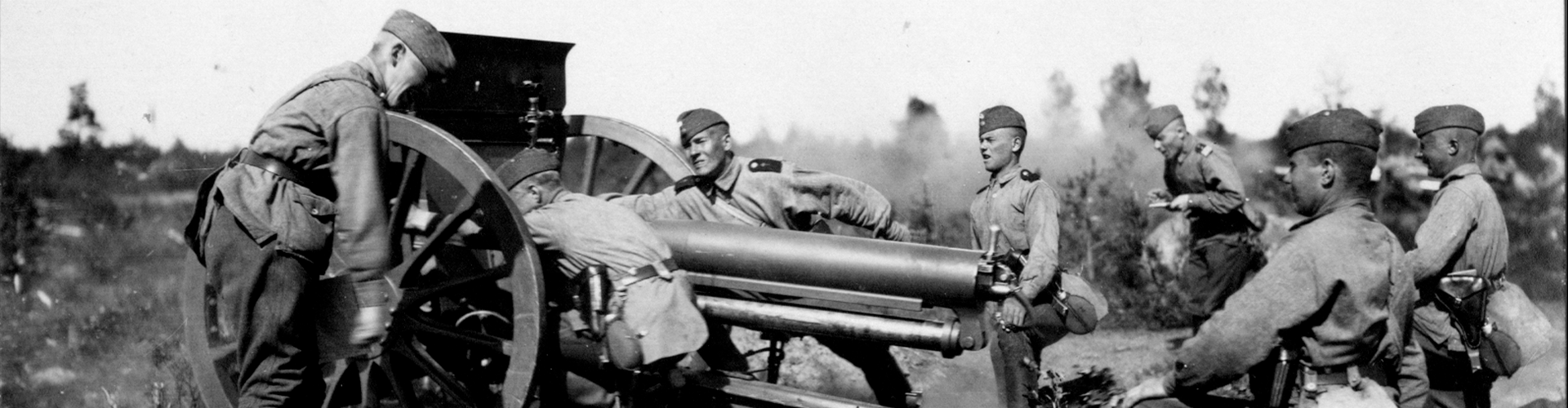
Equipment of the Field Artillery in 1920s and 1930s
After the Civil War, Finland had plenty of captured Russian artillery. However, there was a lot of old equipment in need of repair. The plan was to equip the artillery forces with as uniform a list of artillery pieces as possible. In 1920, an artillery committee was set up to determine the amount of artillery needed. The purchases recommended by the committee were not accepted by the high command. However, eleven heavy guns and four heavy howitzers were purchased from France, Latvia and Poland. In the late 1920s, more heavy howitzers were purchased and the artillery also received its first motorised batteries when Pavesi artillery tractors were purchased from Italy for the Heavy Artillery Regiment.
Most of the funds had to be used for maintenance and repairs of the old equipment. In depot 1, light cannons in particular were overhauled. By installing the barrels of old Russian direct-fire guns on Finnish-made carriages, light cannons were provided for three batteries. Attempts were made to start a domestic artillery industry as early as the 1920s, but the plans did not succeed before the Second World War.
In the 1930s, the military command became concerned about the obsolescence of artillery equipment. However, the procurement proposals of the commission set up in 1935 were again largely unrealised for financial reasons. By the outbreak of the Winter War, the total number of guns had hardly increased since the early days of independence. However, through active repair work, all possible guns had been restored to working order.
Inspections in 1928 revealed that much of the ammunition in stock was almost unusable. Domestic production was insufficient and purchases had to be made abroad. However, the quantities of ammunition available to the artillery were totally inadequate by the time the winter war came. Sighting and measuring equipment was both purchased abroad and built at home.
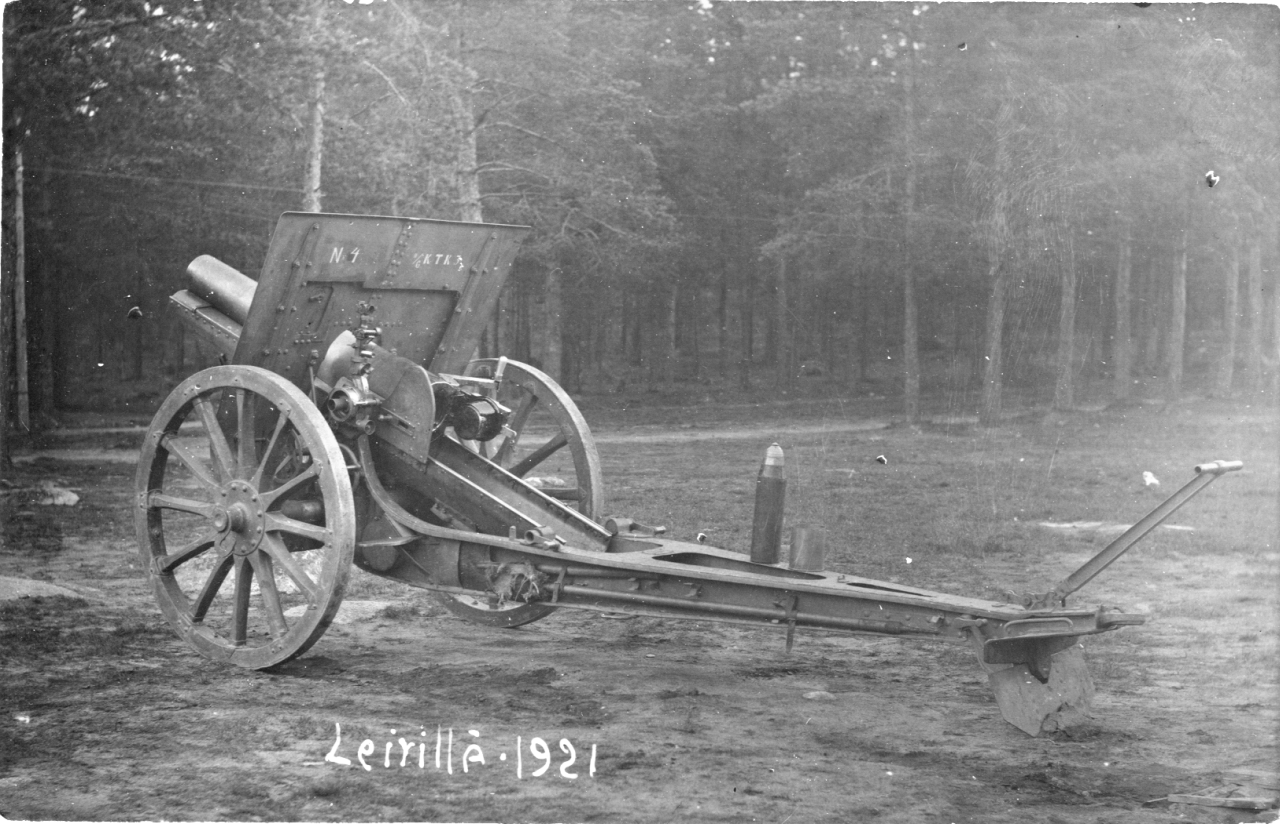
Light howitzer 122 H 10 at Perkjärvi in 1921
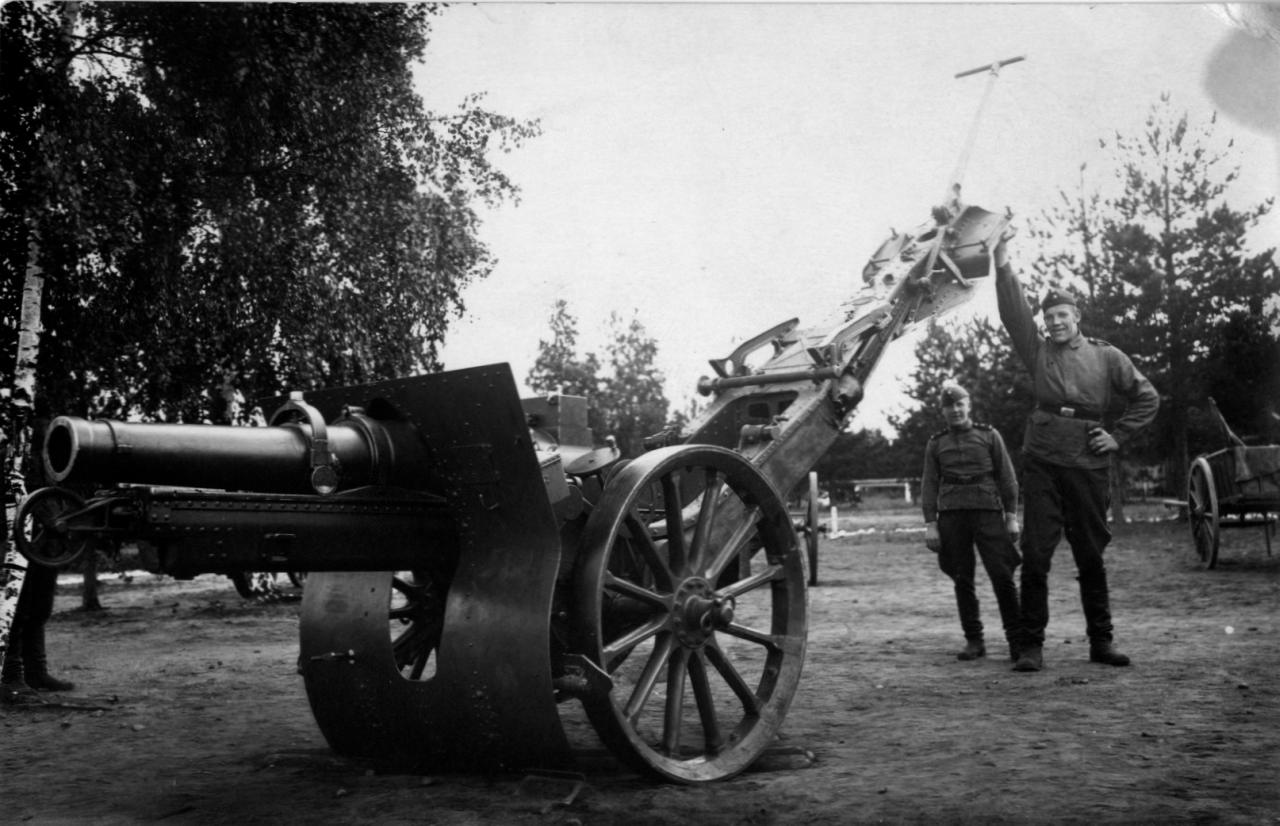
A heavy howitzer 152 H 17 in Perkjärvi. The head of the carriage is held high by private Väinö Myllyrinne, a conscript of the Heavy Artillery Regiment.