Signal troops in mobile warfare
Formation of the Signal Troops
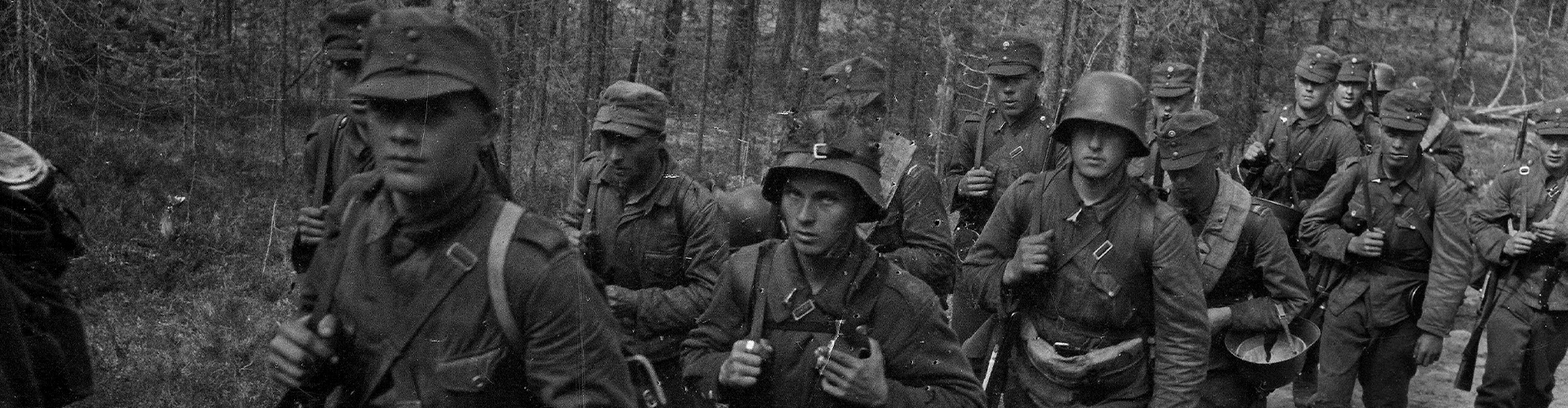
During the mobilization in June 1941, 26 signal battalions were formed. A divisional signal battalion consisted of a headquarters, a central company, and two telephone companies; the army corps battalion also included a special telephone squad. The Headquarters A-battalion took care of internal communications within the Headquarters. Its composition included a headquarters, a central company, a telephone company, and a radio company. The B-battalions handled building communications to subordinate command levels. Their organization consisted of a headquarters and three telephone companies. Battalion strength varied between 400 and 500 men, depending on the type.
The signal battalions were partly motorized. The most mobile was the divisional signal battalion, which included 27 cars, 4 motorcycles, and 47 horses. National communications construction and maintenance were the responsibility of Signal Battalion 10, which was formed during mobilization from postal and telegraph personnel. The large battalion operated throughout Finland. During the war, there were also 11 special telephone squads, 11 railway telegraph and telephone squads, the Headquarters Radio Battalion, as well as signal units for air and naval defense.
More than 4% of the Army’s total strength was assigned to signal duties. At the outbreak of war, the actual signal troops numbered about 12,400 men. Infantry and field artillery regiments, as well as certain other branches, had roughly the same number of signal personnel. The signal battalions were not fully manned during mobilization; about 10% of their personnel were missing. In many battalions, only half or even a quarter of the personnel had basic signal training. The skills of the trained signal personnel were partly insufficient, since in some units a significant part of the interwar training time was used for other than branch-specific training.
Signal Equipment in the Continuation War
The signal equipment situation at the start of the Continuation War was significantly better than in the Winter War. Still, full-strength equipment could not be distributed to all units. About 25% of field telephones and about 50% of 30-line field exchanges were missing. There were sufficient small 10-line exchanges. Over 80% of field teleprinters were missing, but there were enough older telegraphs and ordinary teleprinters. Over 20% of field cable was missing, and there was no field long-distance cable at all. There was enough material to build fixed telephone lines for defensive warfare, but insufficient for constructing deep-reaching communication networks.
Although the total number of field radios had more than quadrupled compared to the Winter War, more than half of the mid-level command radios were missing and initially nearly 90% of artillery fire control radios were lacking. Initially, there were no mobile signal vehicles suitable for maneuver warfare command or lightweight frontline radios carried on the back. Due to limited procurement channels, the equipment was very diverse. Telephone and exchange equipment was mainly Estonian, but for example, there were 34 different models of field telephones. Field radios were mainly procured from domestic radio factories, supplemented by units obtained from Germany and Hungary. Additionally, some captured enemy equipment was in use. The variety of devices hindered training and complicated power supply maintenance and repairs.
Types of Field Radios
During the wars, field radios were divided into the following categories:
■ A radios were high command radio devices
■ AB radios were army corps and division-level radios or radios intended for very long-distance communications
■ B radios were mid-level command regiment radios
■ C radios were infantry battalion-level radios
■ D radios were company-level radios
■ F radios were short-range radios or walkie-talkies operating on VHF frequencies
■ G radios were reconnaissance radios
Actual communication devices were named before the war with a code number type P-12-6. During the war, so-called V-designations were introduced, where radio types were e.g. VREH, telephones e.g. VPAP, and exchanges e.g. VPK10T.
Signal Arrangements of the Higher command.
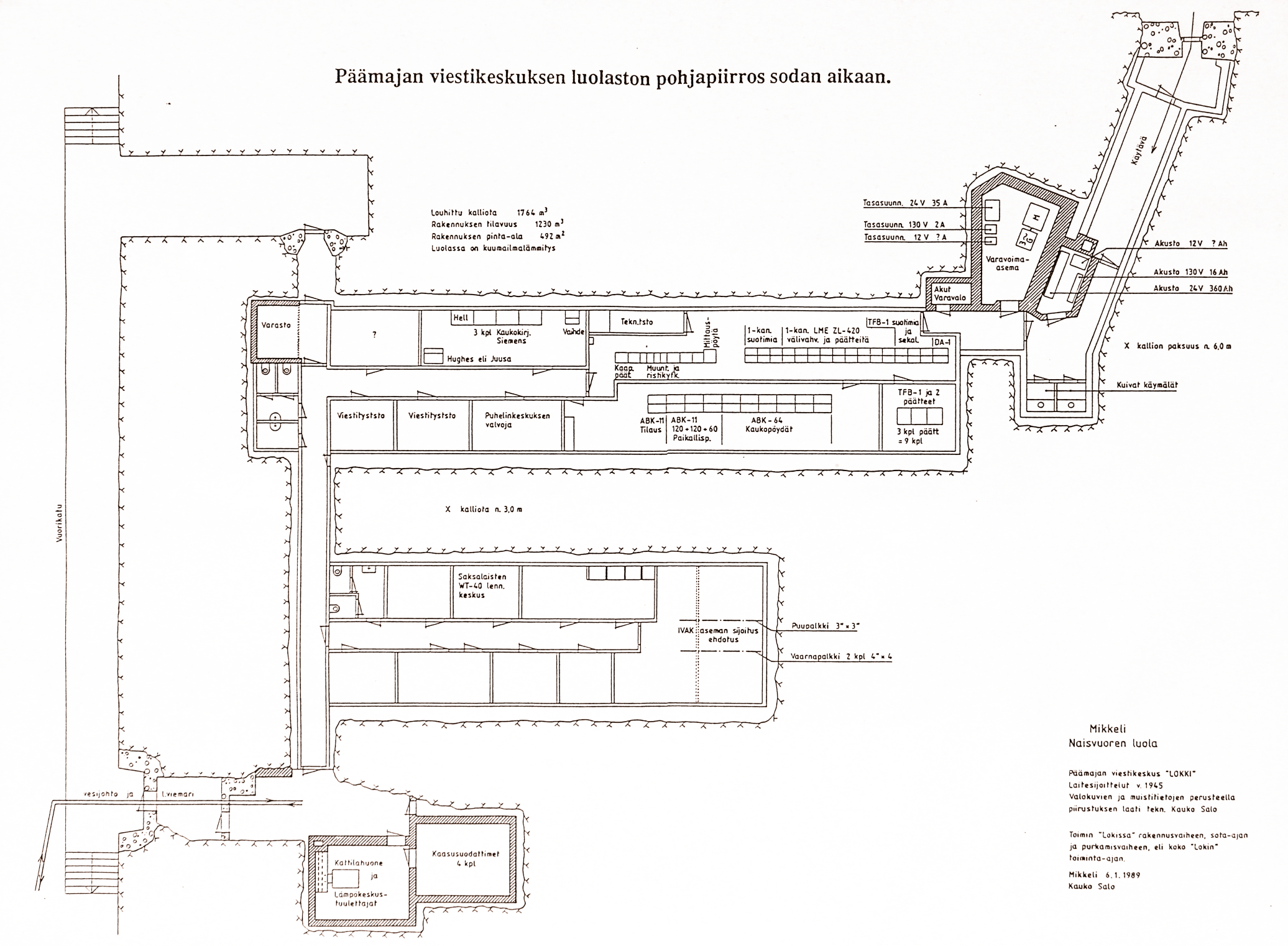
The operations of the Continuation War were commanded throughout the war from the Headquarters located in Mikkeli. Its signal center "Lokki" was completed in the Naisvuori cave complex in Mikkeli in June 1941. The Headquarters signal commander was Colonel Leo Ekberg and the head of the Headquarters Signal Department I was Colonel Rurik Winter. Lieutenant Colonel Eric Heimbürger led the Headquarters Signal Department II, which operated in Helsinki. Army corps headquarters initially operated before combat activities in Sippola, Savitaipale, Sulkava, Tuusniemi, and Oulu. Their task was to define the command posts of their subordinate divisions. The locations of command posts were changed several times during the operations. The structure of the backbone communication network largely determined the locations of the higher command levels during the Continuation War.