
Equipment situation
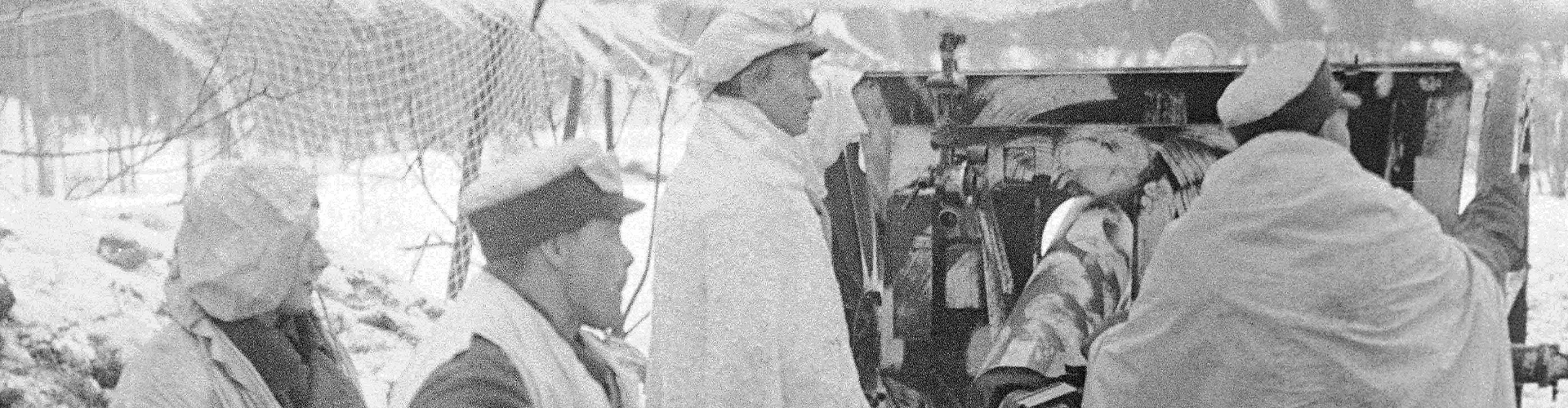
At the beginning of the Winter War, the Finnish field artillery consisted of nine field artillery regiments and four heavy batteries. There was a shortage of artillery and only about 500 guns were in front-line service during the war.
Purchases were made abroad, but most of the purchased guns arrived in Finland only after the war. In the fighting, artillery was both lost but also captured from the enemy.
The ratio of light to heavy artillery was unfavourable, as at the beginning of the war light artillery accounted for 89% of the guns in service. The effectiveness of light shells, especially in thick snow, was significantly inferior to that of heavy shells.
There was almost no long-range artillery capable for counter-artillery mission. Even the heavy guns had a range of less than 10 km.
Although artillery battalions had been used as firing units since the 1920s, the winter war was fought mainly in batteries or even with individual guns.
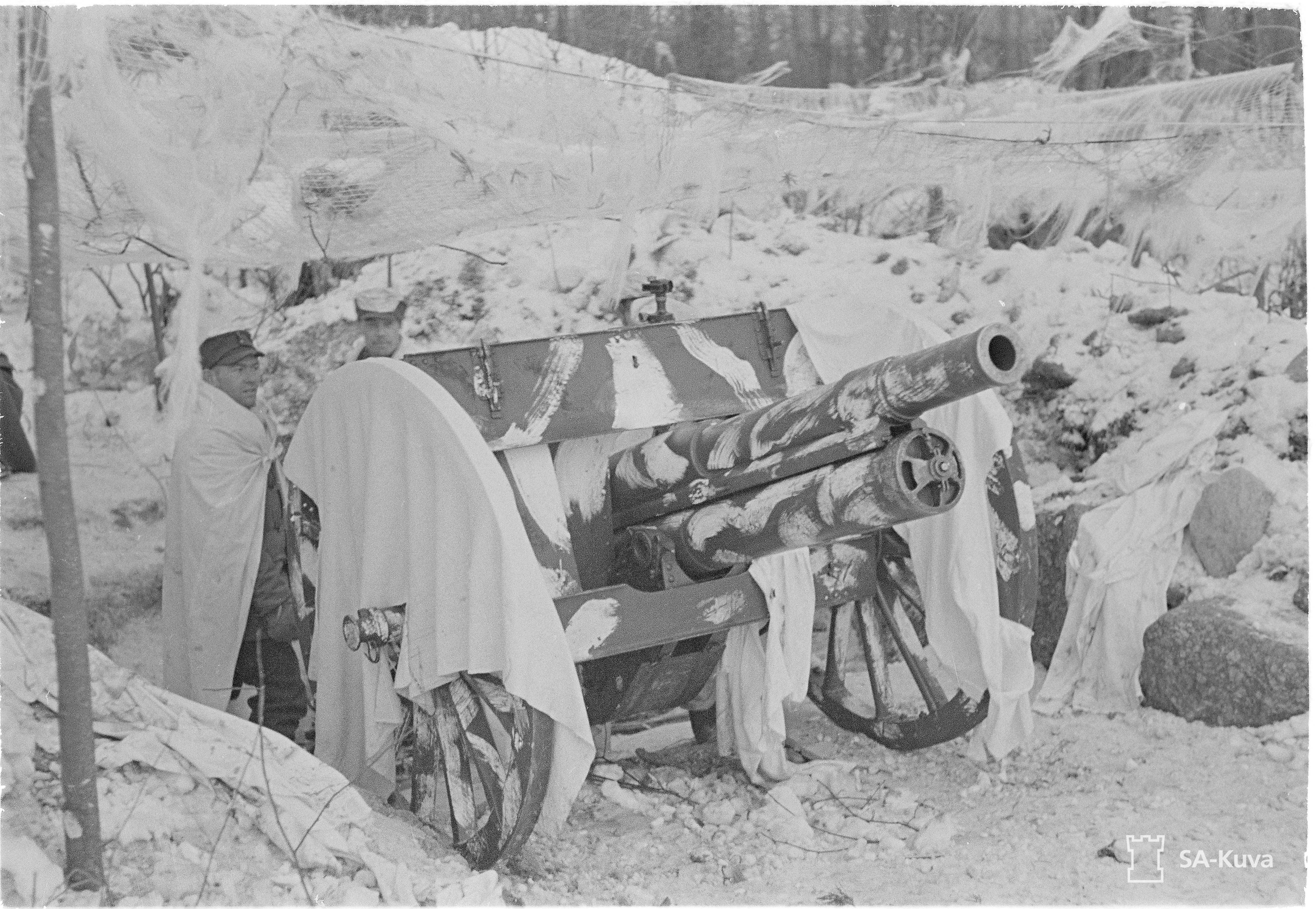
76 mm cannon model 1902 (76 K 02) in position.
Shortage of munitions
Because of the munition shortage, the artillery had to ration fire heavily throughout the war. Even clear targets had to be left unfired to save shells. This meant, for example, that the most favourable phase of the counter-attack, the enemy's regrouping to attack, could not be exploited.
During the whole war, the Finnish field artillery fired about 486 000 rounds, while the Soviet artillery fired an average of 230 000 rounds per day. At the end of the war, the Finns had only a week's worth of ammunition left. Domestic production was not sufficient to meet the demand for ammunition.
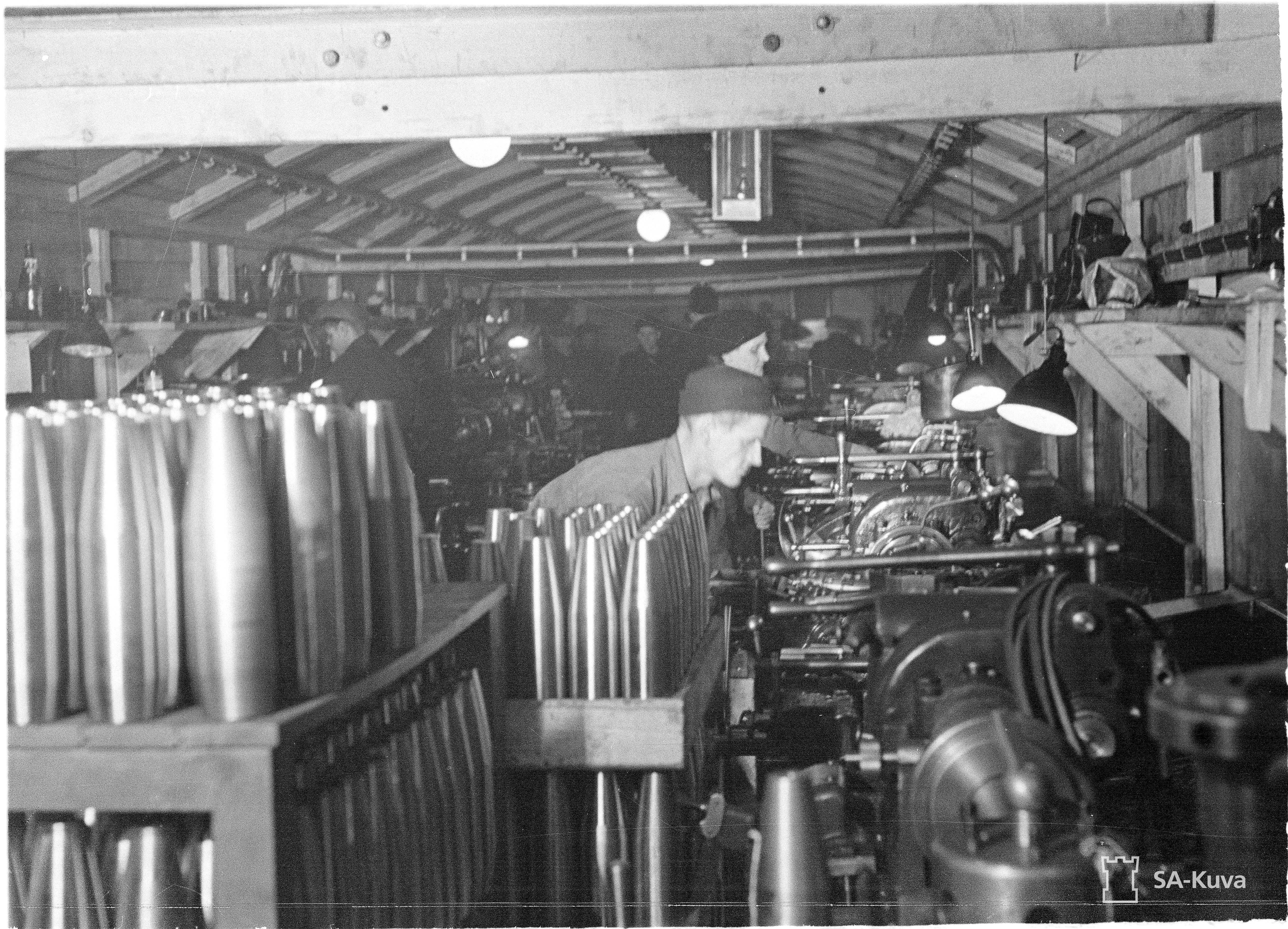
Domestic production could not meet the demand for munitions during Winter War.