
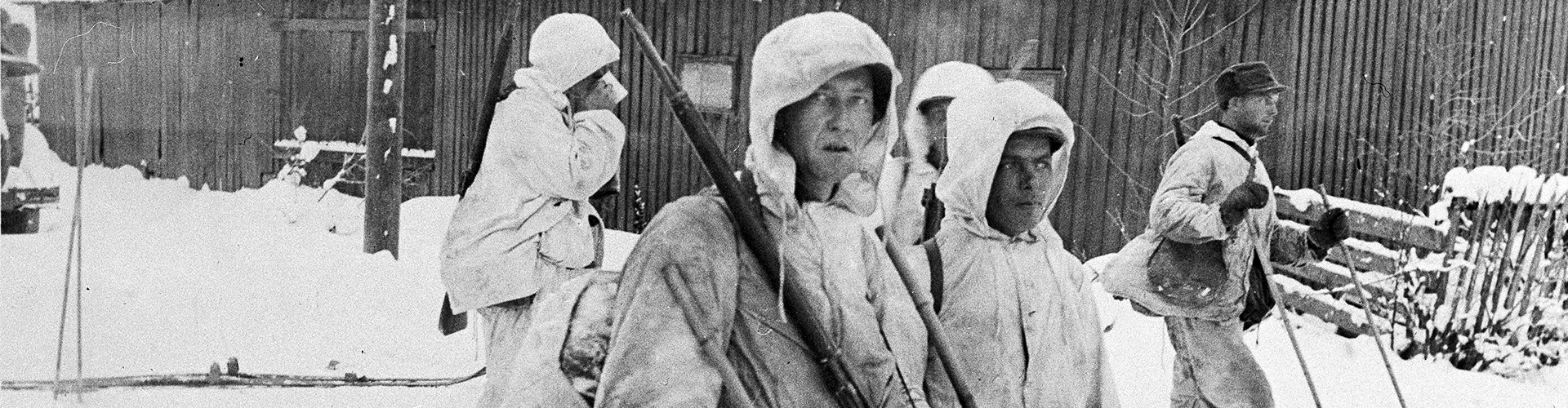
Examples from the Karelian Isthmus
In December 1939, the Army of Isthmus (Kannaksen Armeija) repulsed all Soviet breakthrough attempts at the main defence line, the Mannerheim Line. The Red Army prepared a new offensive for more than a month, from late December to early February. In February the Soviet offensive led to a breakthrough east of the Summa. At the end of the month, fighting took place near Viipuri, in the rear lines of Finnish troops. In the last moments of the war, the fighting went on already in the suburbs of Viipuri.
Since the 1920s, there had been a prevailing perception of Karelian Isthmus as the main theatre of a potential war. When the Winter War broke out, however, the Red Army attacked along the entire eastern border. However, the fighting on the Karelian Isthmus was different in character from the wilderness and encirclement battles fought on other fronts. In the Isthmus, the Finns fortified themselves on the main defensive line to repel the enemy attack. The Soviet Union had concentrated a total of about 200 000 men in the Isthmus, supported by 900 guns and 1 000 tanks. The Finns had 129 000 men on the main defensive line to repel the attack and two lightly equipped divisions as a reserve of the high command.
The most important battles on the Karelian Isthmus were fought at Taipale rive and Summa. Taipale is the easternmost part of the Mannerheim Line on the western side of the Lake Ladoga. Summa is located in the western part of the Isthmus and was also part of the Mannerheim Line, the main defence line. The name of the Mannerheim Line was born and spread to the world from the pens of journalists in Finland. The name was not officially accepted in Finland. After the failure of the Red Army's first attacks, the Soviet propaganda machine was quick to adopt the name. The over-advertising of the "impenetrable" line began in the pens of Soviet propagandists. In reality, there were 221 concrete installations on the land fronts of the Karelian Isthmus, an average of two installations per kilometre of front.
Taipale
The Finnish defensive positions near Lake Ladoga were at the level of the Taipale River throughout the war. Here, in the eastern Isthmus, a very typical entrenchment war was fought. The forest that protected the position from artillery fire was fragmented by Russian artillery fire. The positions in the fields along the river were abandoned early in the fighting. At the same time, the only concrete installations in this direction, "the Alcazar" and "the Field Casematte" were lost.
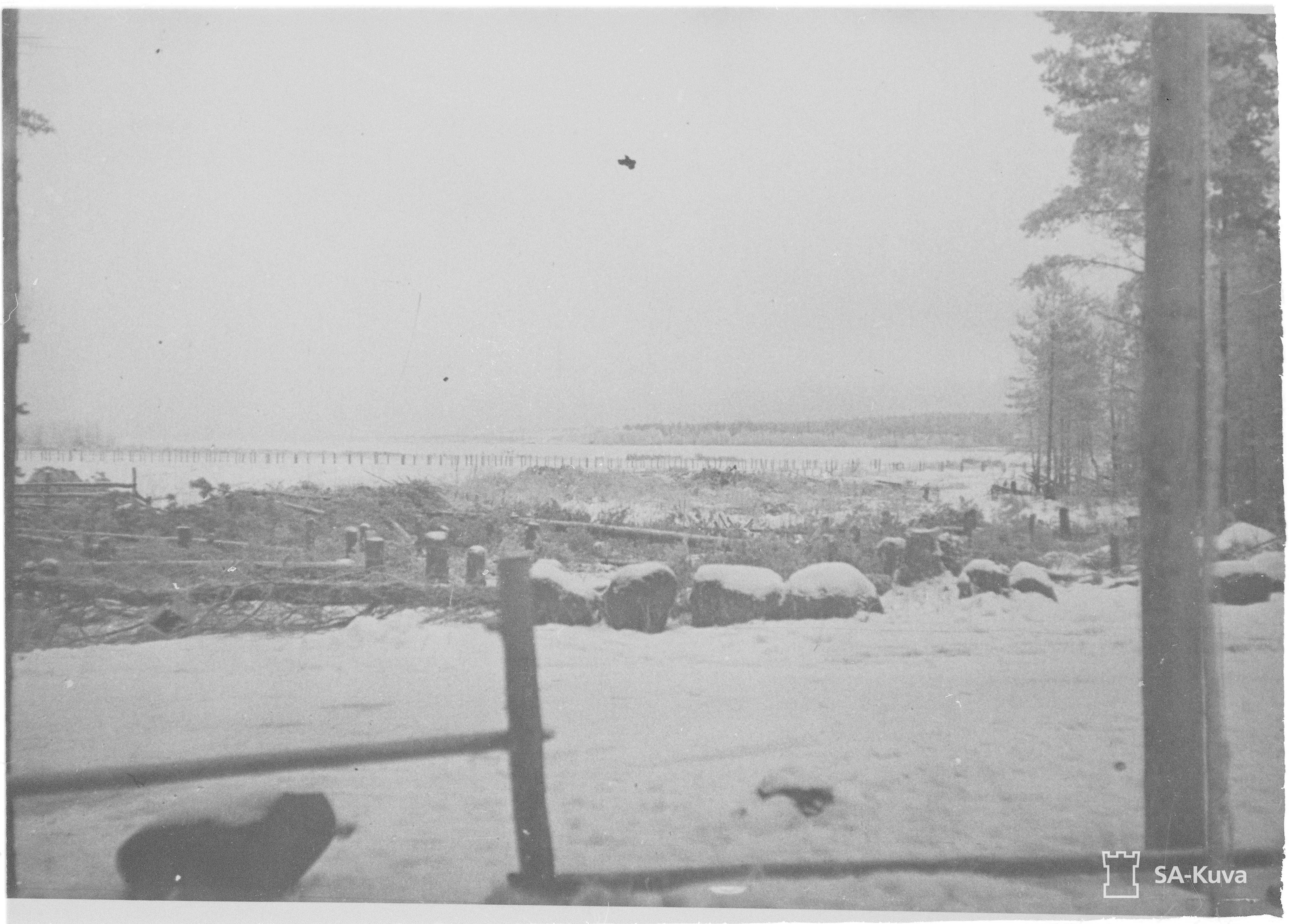
Blockades in Taipale.
Summa
The undisputed focus of the war was on 7.12-13.2. in the area of Summa and the adjacent Lähde. The Finns relied on the concrete bunkers of the main resistance position and the stone and trench barriers built in front of the positions against the armoured troops. The Red Army infantry attacks were stopped by barbed wire and mines, but the tanks managed to penetrate the Finnish rear. The Finnish counterattacks were met with heavy artillery fire.
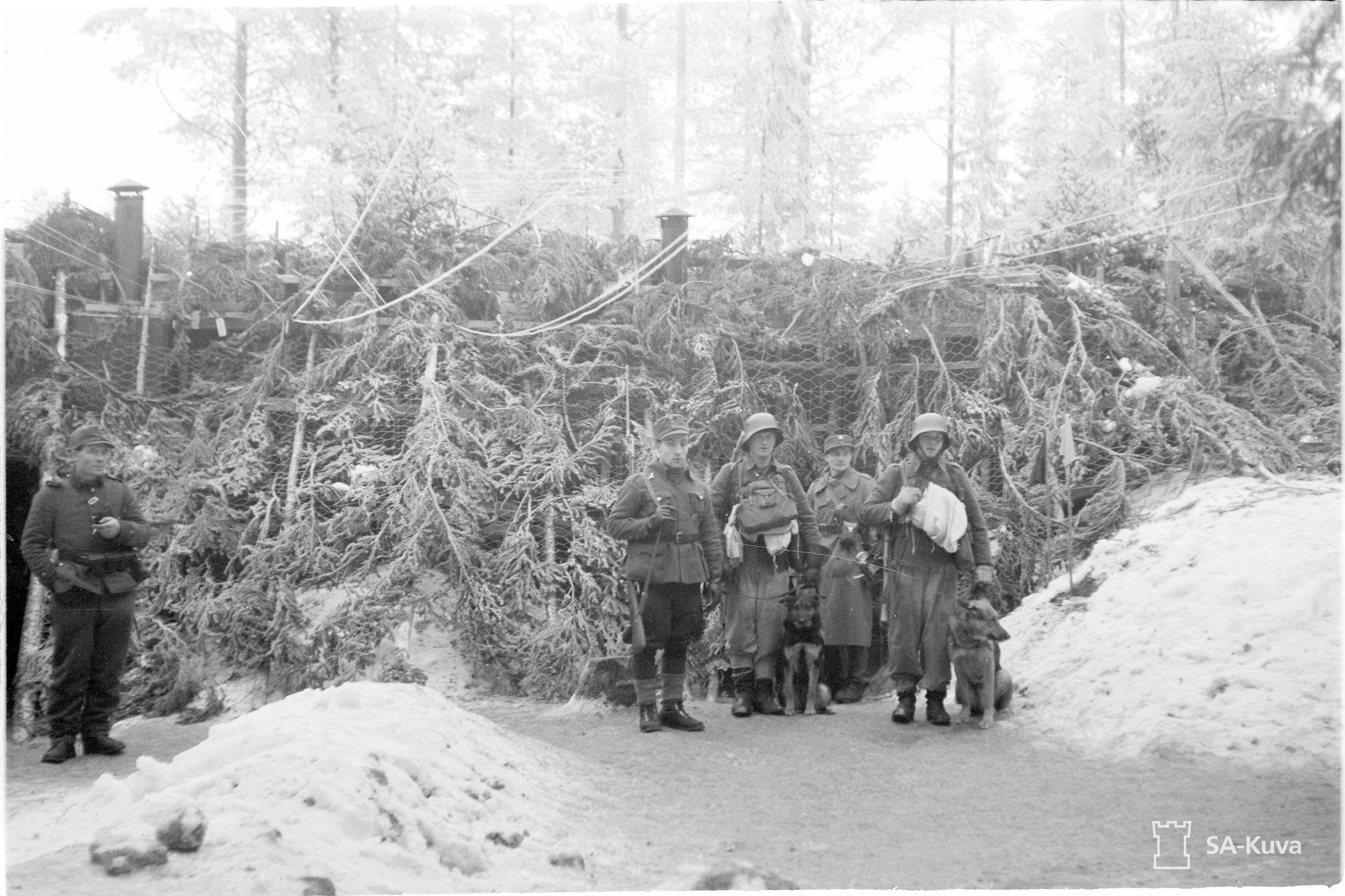
Camouflaged concrete bunker in Summa.
Viipuri Bay
The Battle of Viipuri Bay in 1940 was one of the biggest battles near the end of the Winter War, which ended indecisively. The extension of the war to the Bay of Viipuri was a surprise to the Finns. According to the war doctrines of the time, the ice in the bay formed a "protective shell" that would prevent large-scale crossing attacks during the winter period.
A major offensive in the Bay of Viipuri was therefore interpreted as far too risky and virtually impossible. Only small-scale Red Army invasions in the archipelago zone were considered likely. However, the ice in the bay could even support tanks, so that the Red Army was able to use its firepower to its full advantage. In the last days of the war, the Red Army already had a bridgehead on the western coast of the bay.
The Battle of Viipuri caused heavy losses for both sides. Although the Red Army had not made a breakthrough by the time peace came, the fighting had already shown that the defender's chances of stopping the invader were now non-existent.
It is estimated that the bridgehead would have developed into a breakthrough within a few days. By the end of the war, the invader had the initiative in his hands across the entire Bay of Viipuri front. The Russian bridgehead was almost 10 km deep and 7 km wide.
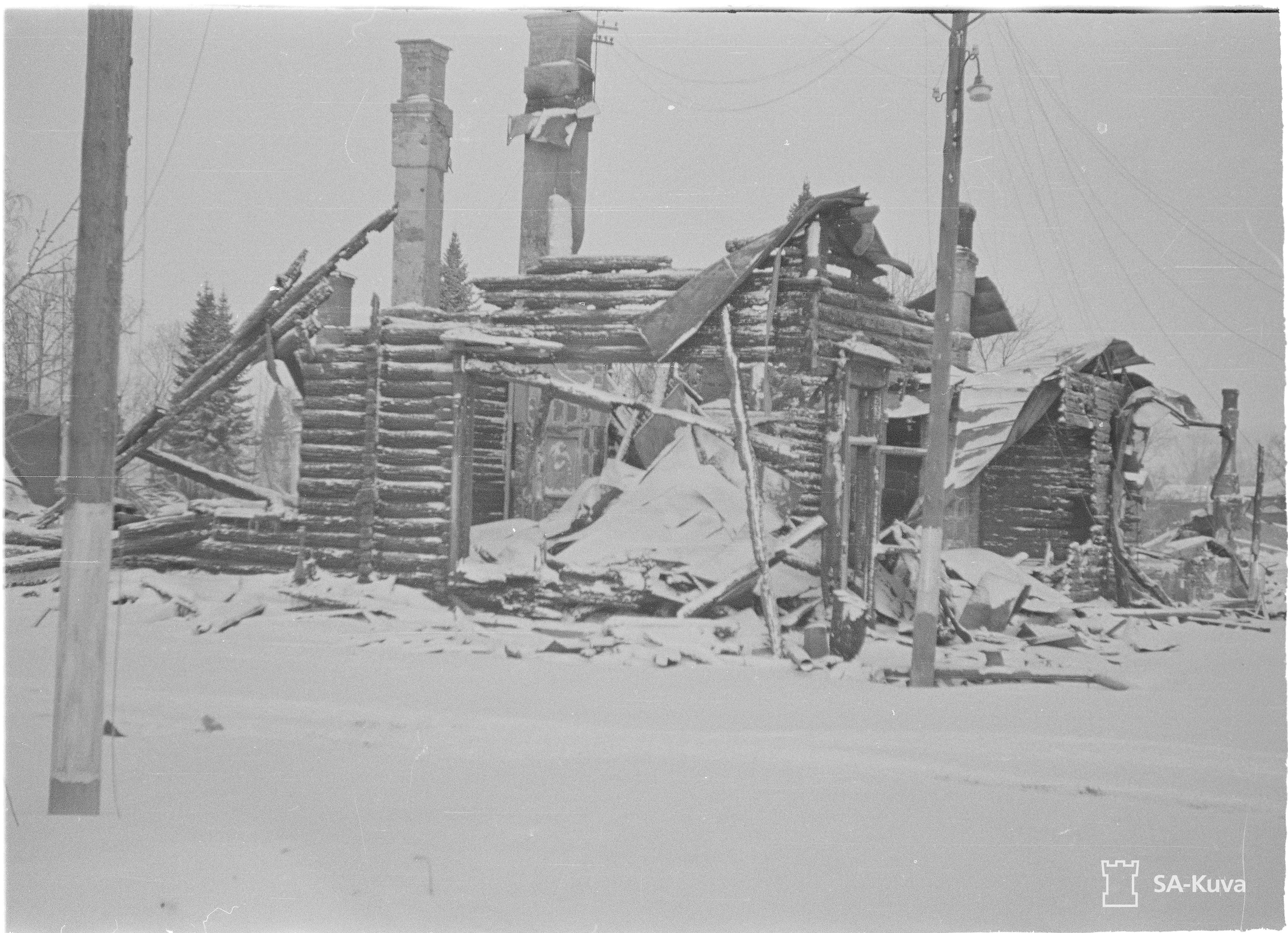
Destoryed building in Viipuri 13th of March 1940.