
Perkjärvi artillery camps
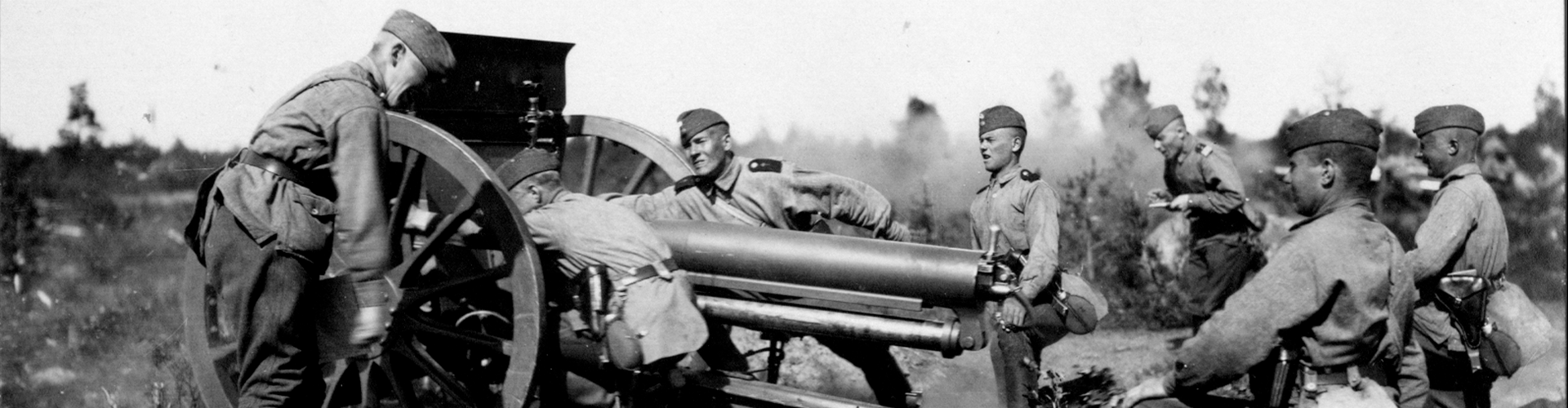
The most important annual training event for the Finnish field artillery was the Perkjärvi artillery camp, which was held in 1920-1939 in Perkjärvi on the Karelian Isthmus. The area had already been used for training by the Imperial Russian Army. In addition to firing drills, Perkjärvi was used to test firing techniques and develop artillery tactics. Artillery inspector Nenonen's ideas on the development of the artillery were also reflected in the shooting at Perkjärvi. During the basic training period of 1920-1922 the basic firing unit was a battery, during the preparatory period of 1923-1924 the basic firing unit was changed to an artillery battalion. The introduction of new firing methods and fire operations took place between 1925 and 1939. The Perkjärvi camps, which brought together the entire field artillery, were an important factor not only in the training of regulars and conscripts, but also in creating and strengthening the artillery's spirit of unity.
The Perkjärvi camp area on the Karelian isthmus had been used by the Russian Empire in the early 1900s. It was first used by Finnish conscripts in the summer of 1919, when the Field Artillery Regiment 2 used it unofficially as a training area. The camp area was located in the village of Kaukjärvi, but the railway connection to the camp was via Perkjärvi. As a result, the name of the camp quickly became Perkjärvi Camp. The area was taken over by the Finnish field artillery for firing camps in 1920. The summer of 1920 was overshadowed by the international situation among the participants. In the east, the internal political situation in Soviet Russia had not calmed down and no formal peace treaty had been signed between Finland and Soviet Russia. The Peace of Tartu was not concluded until October 1920. There was also a threat from the West - Sweden was prepared to take control of Åland, even by force.
Artillery development work for Finnish needs was carried out at the Perkjärvi artillery camp at Nenonen's headquarters, a house called Mustankorven hovi (English: The Court of Mustankorpi). Many mathematics students and mathematically gifted young artillery officers applied for jobs at Mustankorven hovi, where sooner or later also reservists with masters degree in mathematics were recruited as so-called summer 2nd lieutenants.
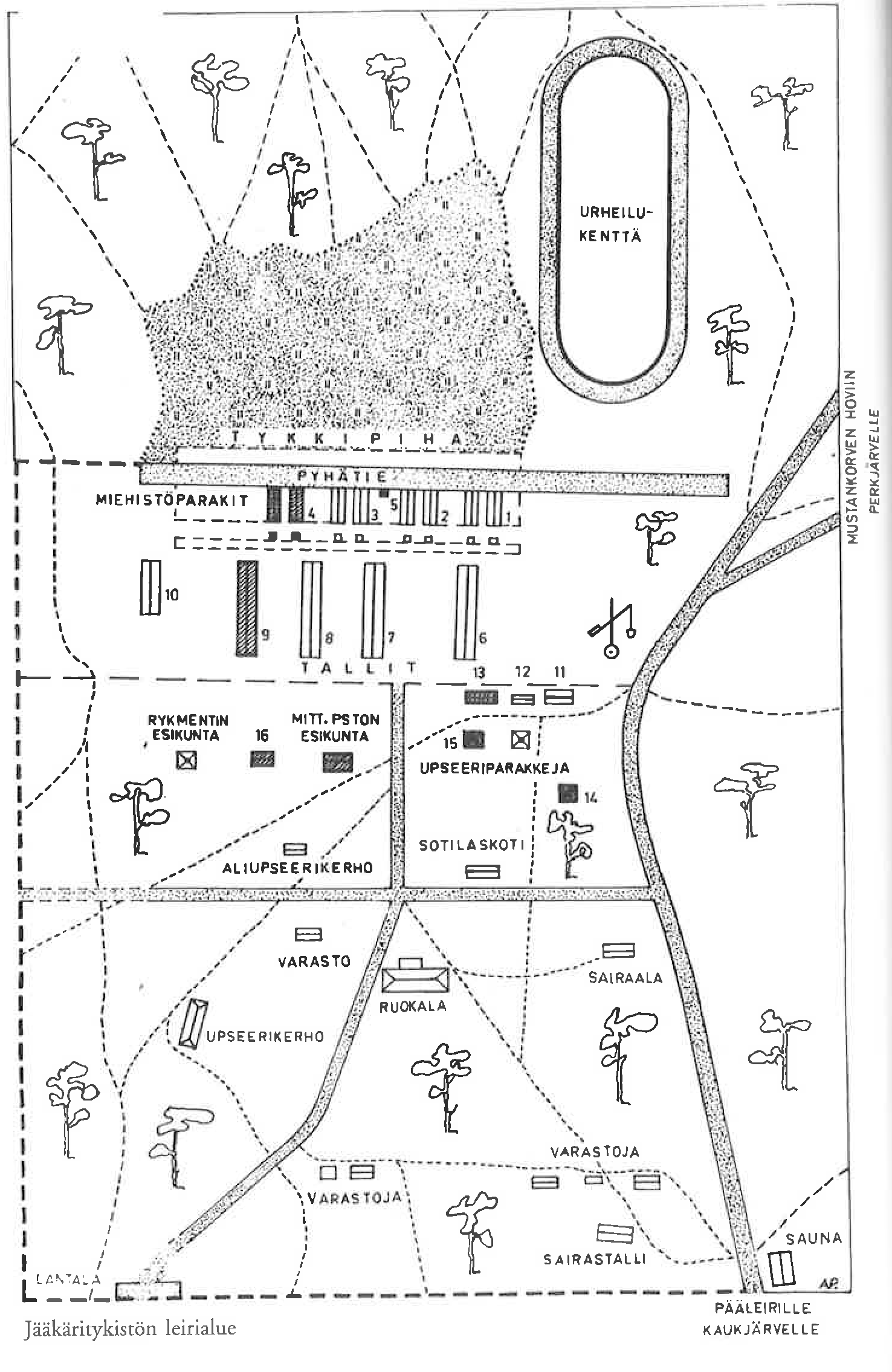
The camp area for the jaeger artillery was located slightly away from the main camp, where KTR1, KTR2 and KTR3 stayed. However, the structure of the camp area was similar to the main camp.
The general wake-up time on camp days was 5 am, an hour earlier than at the barracks. After the morning activities, the actual service began at 7 am. In addition to the personal morning activities, the morning activities in the camp included, among other things, stable duty. On firing days, the batteries had to be ready to go by 7 am, horses already harnessed in the gun yard. After the inspection of the batteries, the order to march was given, and at the same time the respective firing position and fire observing positions were determined. Each firing was immediately critiqued, often very bluntly, and errors were not left unaddressed. When evening came, the troops returned to camp. After returning, the first thing to do was grooming the horses, after which it was the conscripts' turn to groom themselves and eat. If it was an evening leave day and permission to leave the premises was granted, the soldiers would rush to the evening entertainment offered by the village of Kaukjärvi.
From the first camp onwards, the camp days ended with a communal evening shot followed by an evening service. At 8.45 pm, the call to prepare for the evening service echoed throughout the camp. The regiments assembled in units on the Sacred Road (finnish: Pyhä tie), which was not to be entered except for evening services or parades. The evening shot was fired at 21.00 hours, after which the day's toil was concluded with a simple evening service.
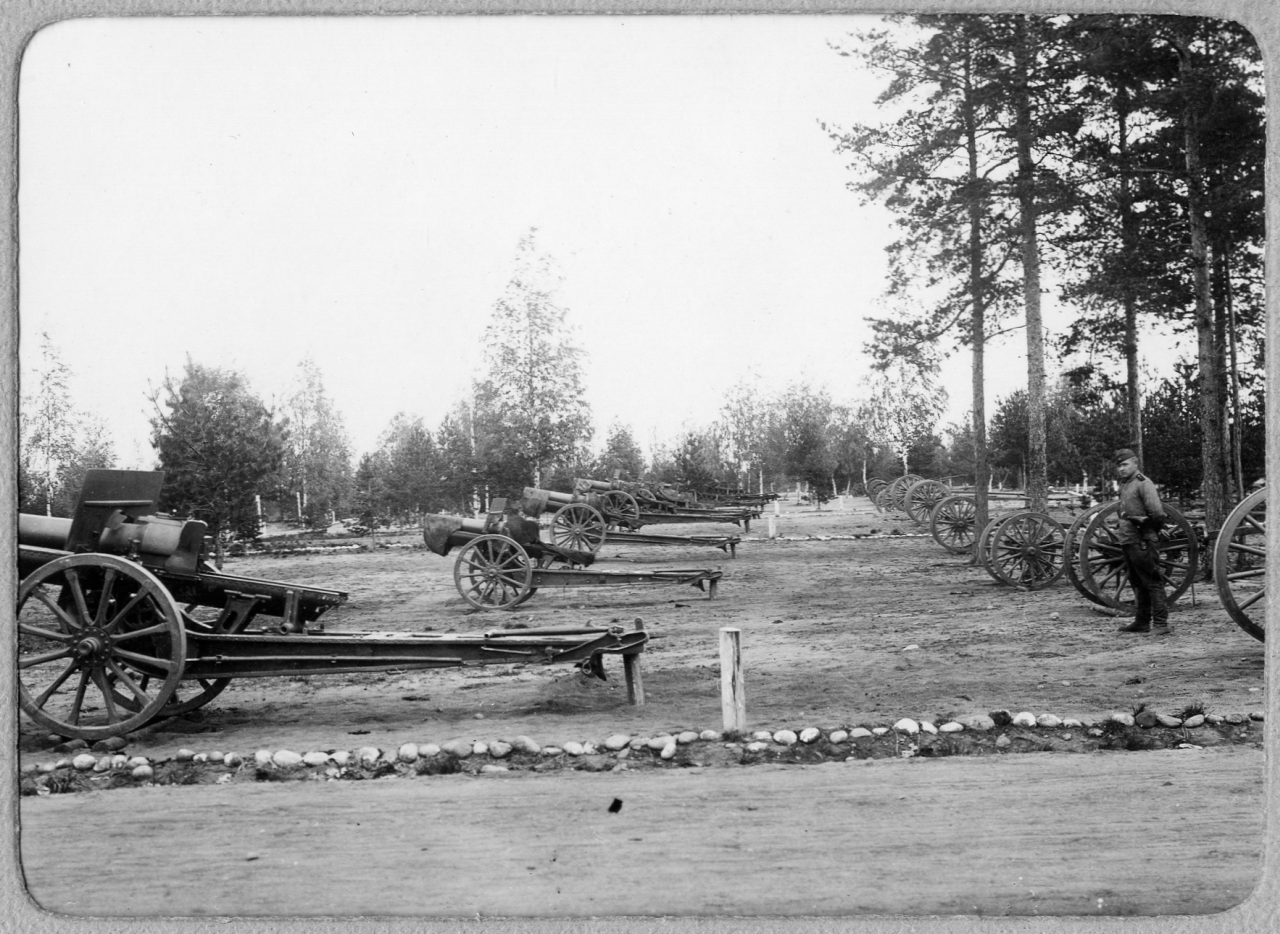
Between drills, guns were kept on the gun yard.
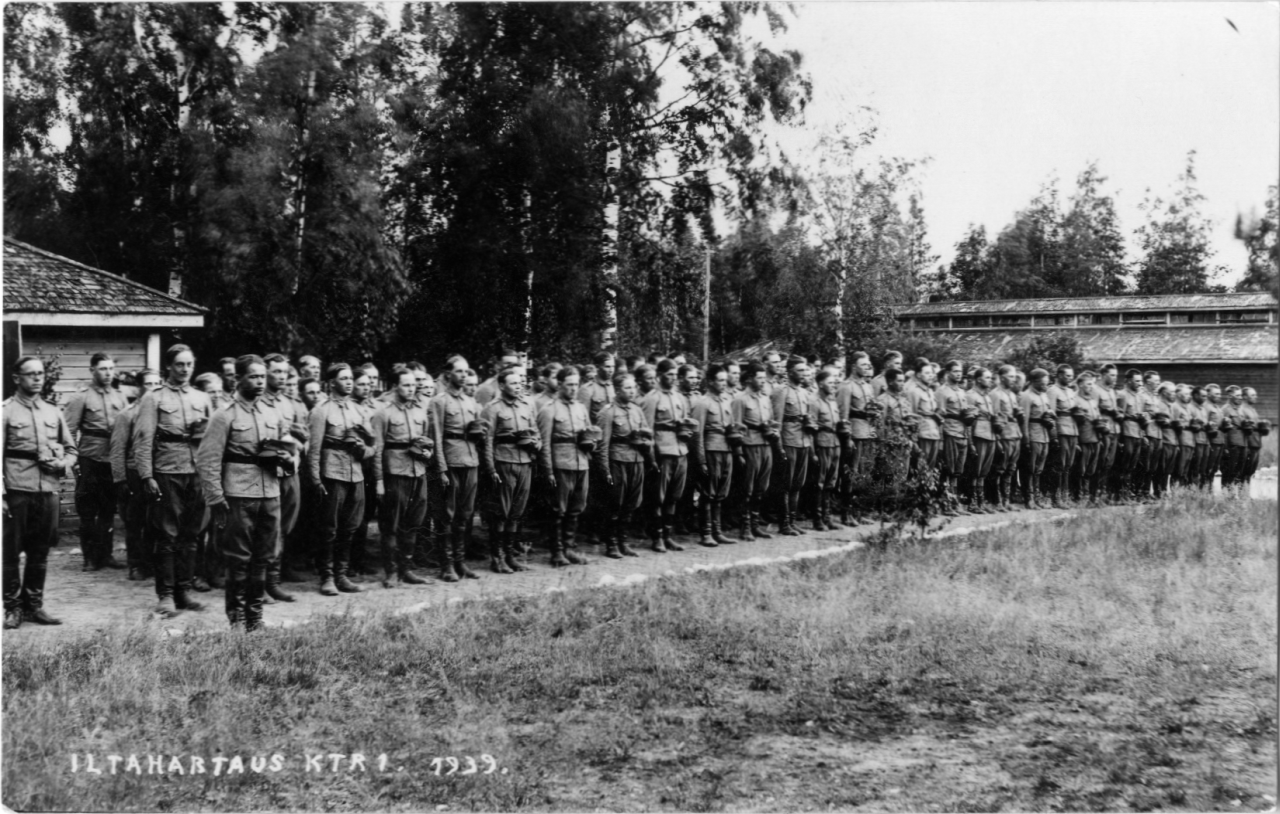
Evening service in Perkjärvi on summer 1939.