
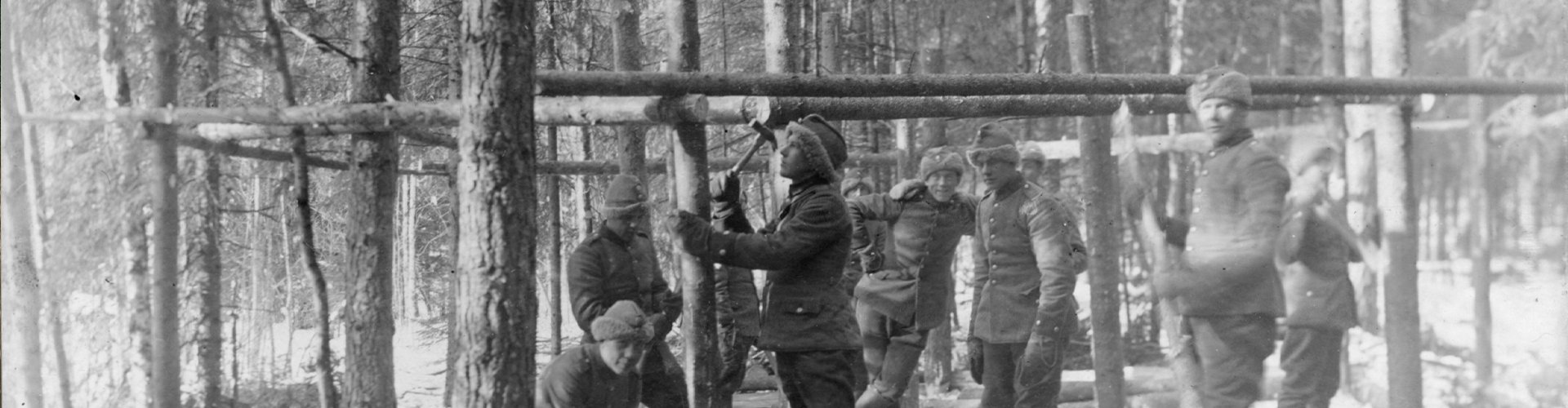
In the early days of the branch, the engineer's personal tools were German and Russian shovels, axes, picks, saws and barbed wire cutters. The squad leader had a 20-metre tape measure in addition to a field axe. As time went by, domestic tools replaced foreign ones. The engineer company's horse-drawn tool vehicles carried gravel shovels, iron picks, log saws, sledge hammers and anchor stakes. The supply vehicles carried ropes, iron wire, nails and staples.
When bridges were built, hand-operated pile-drivers were used to create foundations. Between 1925 and 1926, the first machines were introduced, including a tractor, air compressor, concrete mixer, stone crusher, road grader and road roller. In the 1930s, the first vertical-axis outboard engines, machine tractors and trucks were purchased. Equipment for field ploughing was also acquired for experimental use.
Pontoon equipment
The first experiments with boat bridges were carried out in Hämeenlinna in the summer of 1918 by the then Engineer Training Battalion, using large Estonian sea boats and deck equipment purchased from a local sawmill. Following the same principle, a number of boats and decks were purchased in 1924 from a boat-builder in Kuru for the Engineer Battalion in Koria.
The first fleet of six pontoons with m/25 deck and rowing gear was purchased in 1925. Five pontoons with deck fittings were manufactured by domestic industry. This German equipment, familiar to the Jaeger engineers, was used for ten years.
The more advanced pontoon equipment m/35 was purchased from France. The pontoon transport trailer m/37 was developed in Finland. The acquisition of the new pontoon equipment significantly increased the bridge-building capacity of the engineer branch. Depending on the load-bearing capacity, the equipment could be used to build 360-640 meters of bridges and rafts with capacity of 4.5-12 tonnes.
The m/38 raft (finnish: ruuhi) equipment was developed in Finland. The rafts could be used as rowing vessels and, together with the deck equipment, as ferries and bridges. It allowed the crossing of troops and equipment weighing less than 1.5 tonnes. By the end of the winter war, 15 sets had been acquired, each of which consisted of 36 rafts with deck and rowing gear. From one set could build 121 metres of raft bridge.
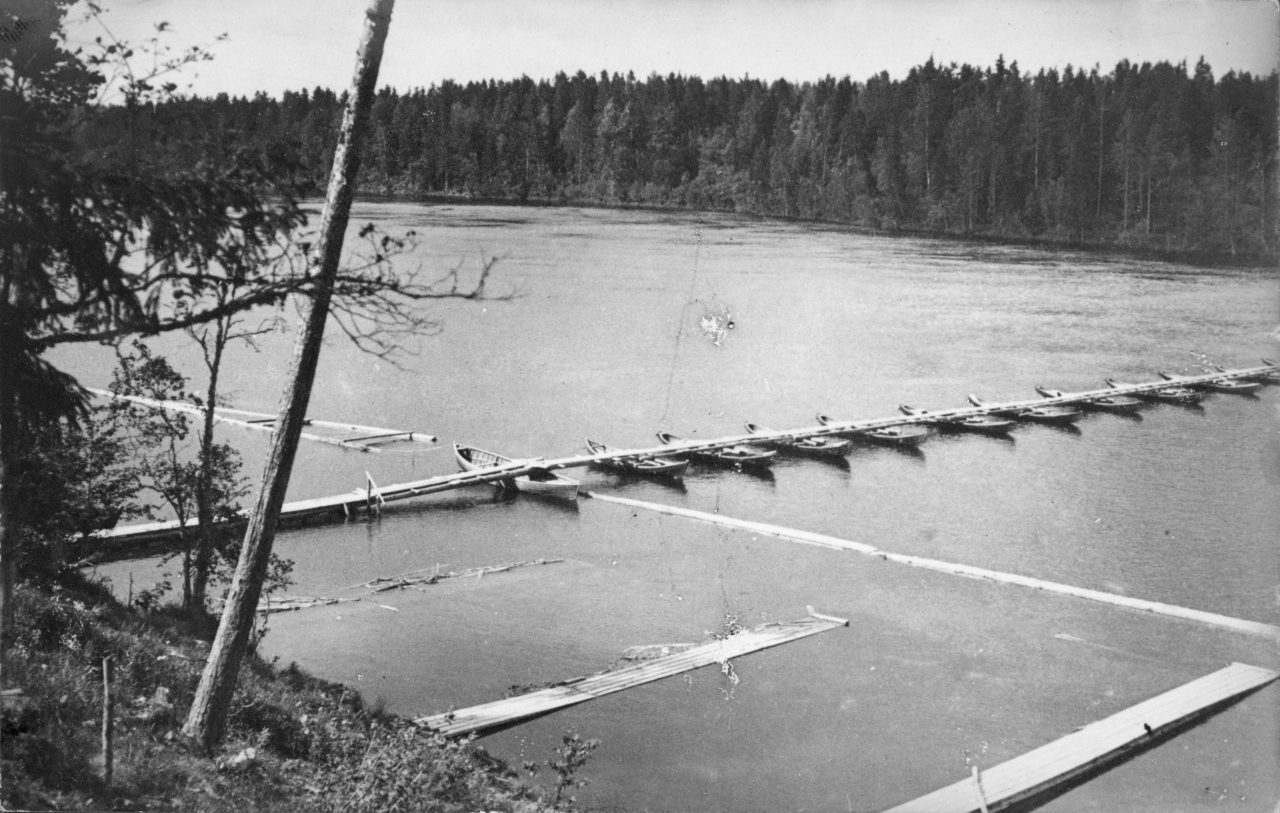
A bridge built from boats in summer 1924.
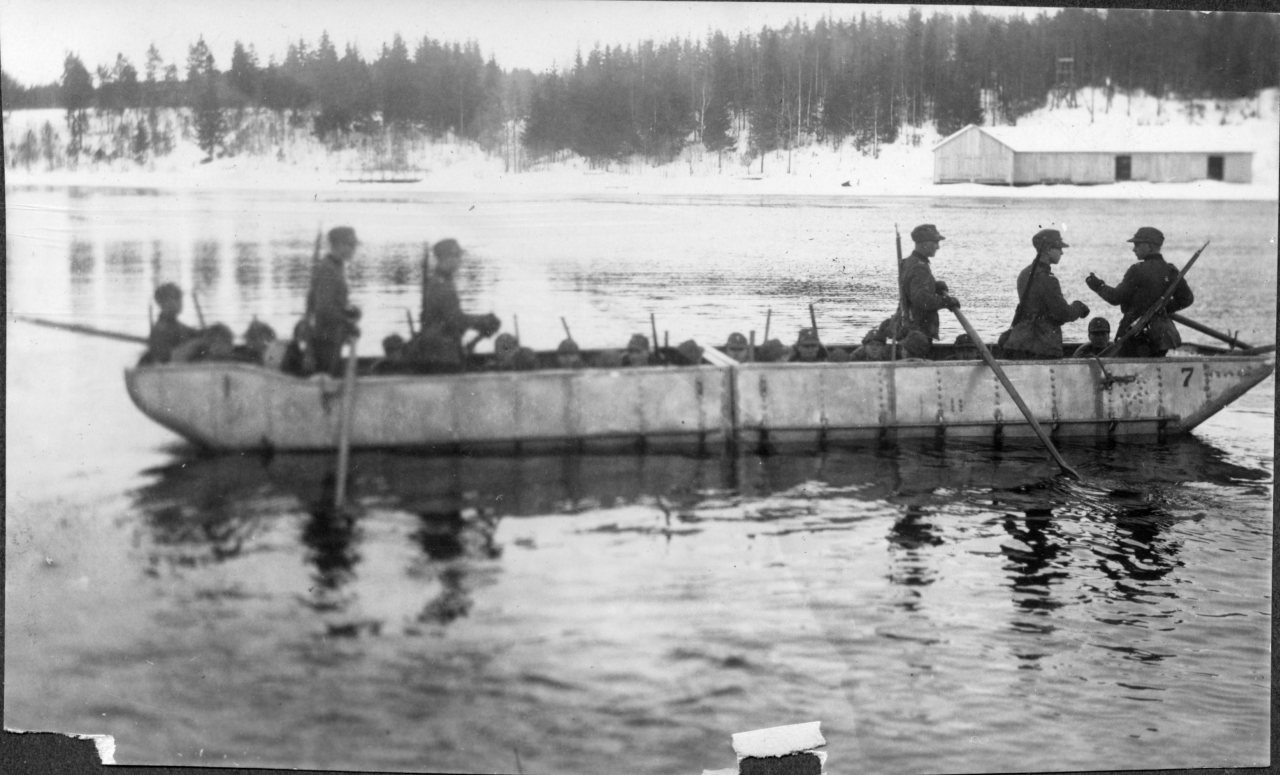
Pontoon m/25 being used as a ferry.
Other means to cross the waters
In the early 1920s, pioneers used boats and rubber boats, rafts made of logs and barrels, and footbridges with boats, raft bags and barrels as floating supports. Just under 4 000 raft bags were purchased. For crossing narrow waterways, French and German-style express bridges were built using plank ropes. These were later replaced by a domestic version using reeds and boards. This bridge m/32 was known as the 'Iivari Express Bridge' after its developer, Iivari Kauranen.
And express bridge made from logs and rope was also suitable for crossing flowing rivers. The bridge was supported by logs fixed every few metres to steel cables at their upstream ends, and running wires were attached to them.
A variety of permanent wooden bridges were built in the barracks area of the Engineer Battalion and for various communities. Between 1920 and 1939, the Engineers built 12 different bridges in ten locations. The length of the road and field bridges built varied between 20 to 80 metres. The longest bridge built was 340 metres long.
Ice bridges were constructed by artificially strengthening the ice cover and by sawing a raft out of solid ice and turning it across a melt body of water. The idea for the ice bridges came to Pioneer Battalion Commander Lauri Stark after hearing about ice bridges used in Ostrobothnia "from time immemorial" to cross a river that was only partially covered with ice. If the ice was thick enough, a long piece of it was sawed off and, with the help of the water flow, turned to catch the ice on the opposite bank. The first ice bridge experiments on the Kymijoki were carried out in the winter of 1923 and continued in the winter of 1925. In March 1929, an ice bridge was used in a military exercise by the 3rd Division. During the same exercise, the engineers built log cabins to accommodate a half-platoon as an experiment. However, the log cabin was found to be too large and in the mid-1930s the idea was abandoned altogether with the introduction of the half-platoon tent.
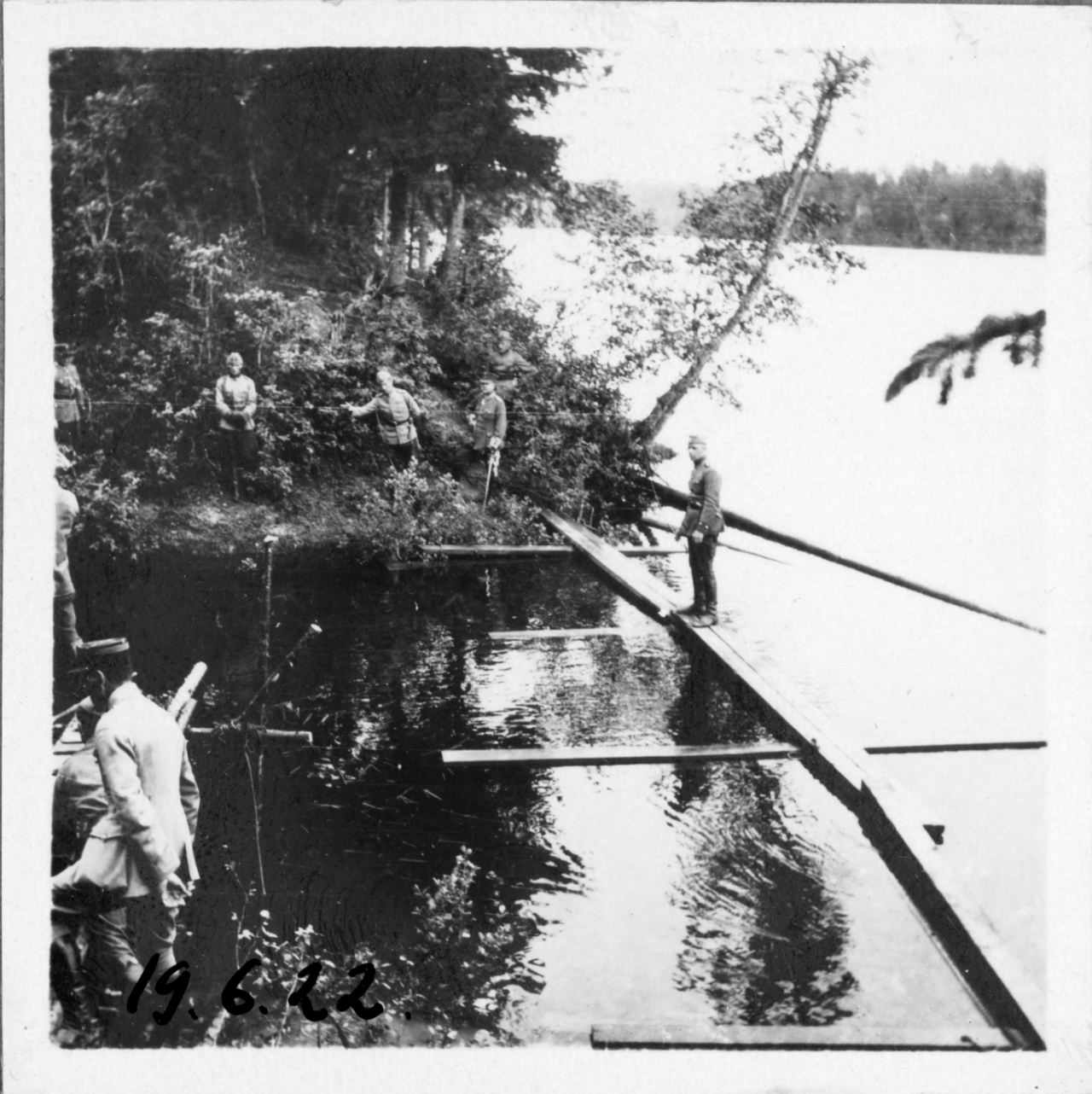
Iivarin Pikasilta
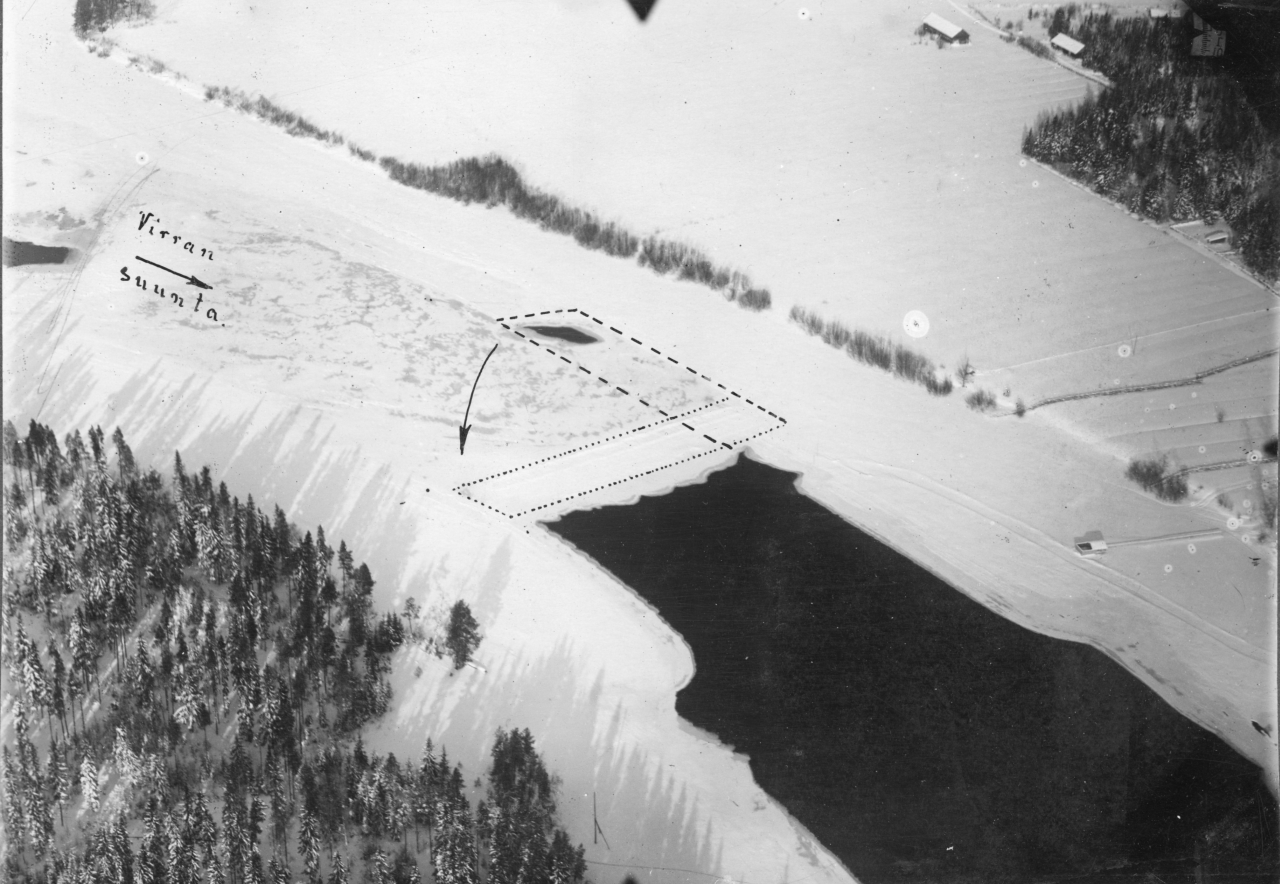
Jääsillan periaate kuvalla havainnollisettuna.
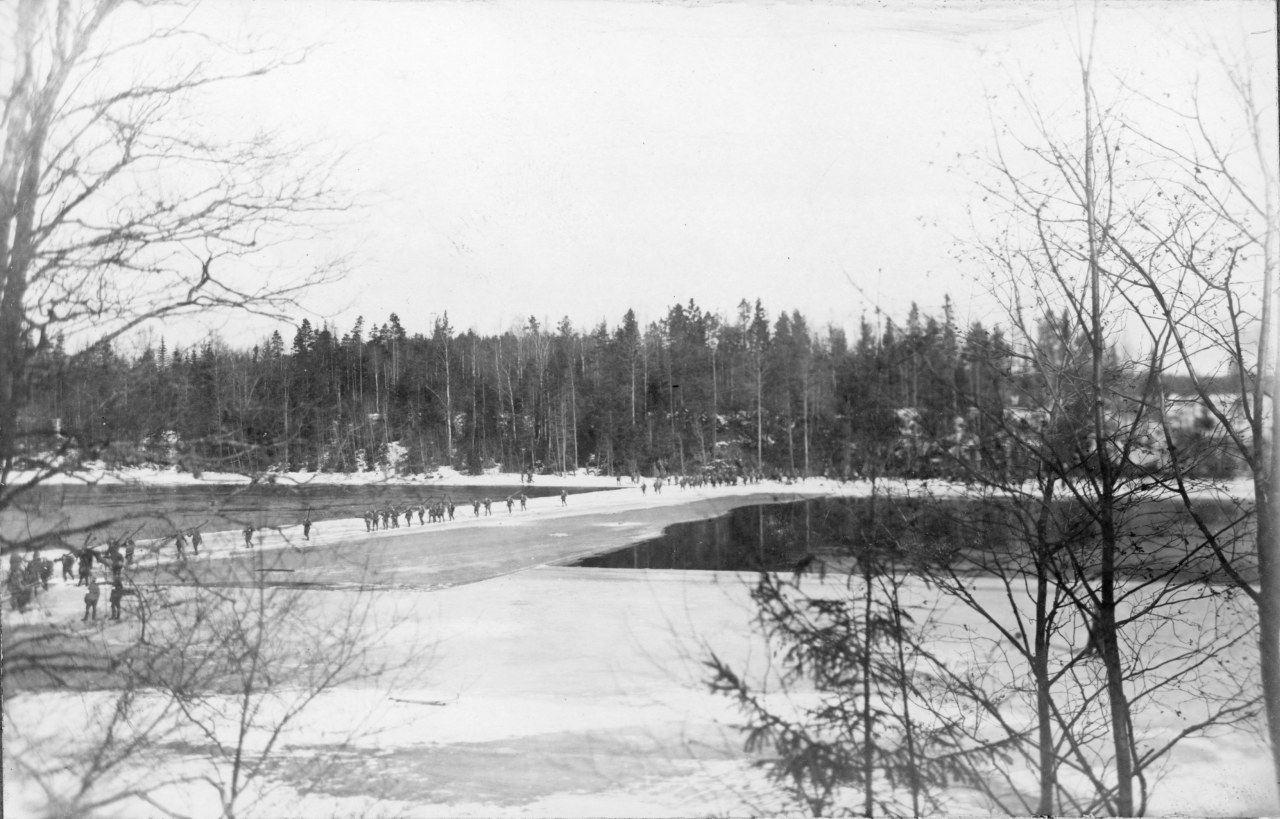
Jääsiltaa ylitetään.
Demolitions and trapping equipment
The engineers practised the demolition of various objects according to the "Demolitions Manual" published in 1923. In the 1930s, TNT was the main explosive used, but in the early years of independence, cheaper and more readily available proxylin and dynamite were used. The charges were detonated by means of a timed fuse or an electric blasting machine. Several explosive charges were linked together by a detonating fuse. The method of demolishing railway rails was established to attaching kilogram charges of TNT to each of the two rail joints.
Blast tests showed that the placement of the charges had a significant effect on the effect achieved. Ideally, the charge had to be placed inside the target and covered. It was also advantageous if the structure of the target allowed for rapid placement and attachment of the charge. In 1923, the Technical Troops drew up a proposal to the General Staff to equip railway bridges with special equipment and explosive chambers to facilitate rapid demolition, and to equip road bridges with a explosive chamber. The realisation of the need for peacetime structural preparation for demolition thus emerged as early as the 1920s.
The incendiary bottle (later known as Molotov Cocktail) was a glass bottle containing petrol and tar with external firing sticks, developed by the Engineer Battalion between 1937 and 1939 as a close-range anti-tank weapon.
Concealed charges were used as traps. A percussion fuse was placed on top of the explosive and detonated when stepped on or when the firing pin was pulled. Explosive charges with a detonator placed in a wooden box were used to counter vehicles and tanks.
Trap and minefields were first built by engineers during the Ladoga Karelian training manoeuvre in the winter of 1937. In the absence of training material, only reconnaissance, planning and marking of the fields was carried out. The only factory-produced mine was the m/36 anti-tank mine, of which 5 000 were produced by the autumn of 1939. For reasons of secrecy, its use had not been practised by the engineers, even among staff, before the autumn of 1939.