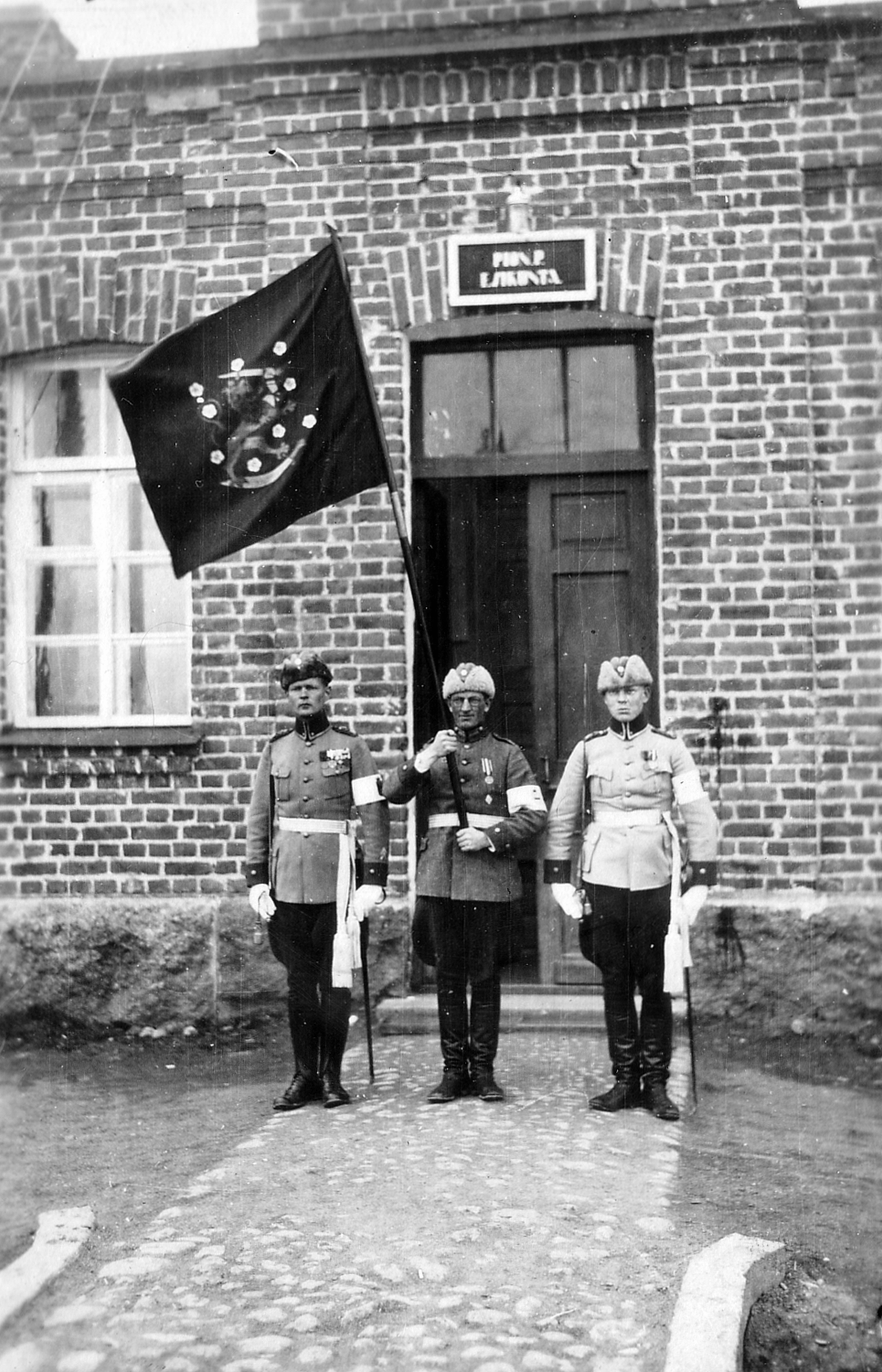
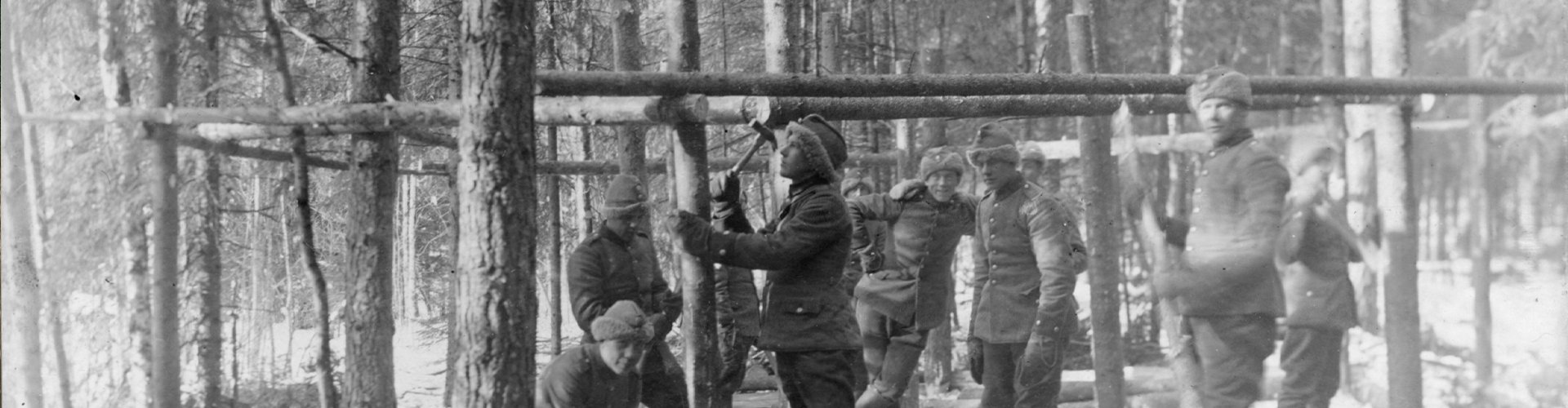
When the Finnish Defence Forces began to be built in the summer of 1918 with the help of German military experts, the tasks of the engineers were defined as operating in combat like rifle infantry, overcoming water obstacles, demolition work and field fortifications work. Over the next two decades, the range of tasks diversified to include crossing waterways, road construction and maintenance, demolitions, trapping (later minelaying), field fortifications, participation in base fortifications and combat engineer duties.
Engineer units
The Engineer Training Battalion was established in Hämeenlinna on 12 July 1918, with the task of training the engineer battalions of the three divisions and the Jaeger brigade. The battalion consisted of a headquarters and four companies. When the battalion moved to Viipuri in the autumn of 1918, two armoured trains were added to its composition. In Åland, a company from the battalion was assigned to destroy fortifications built during the World War. From October 1918 to April 1919 the battalion was engaged in field fortifications work on the Karelian Isthmus. On 23 April 1919 the battalion was divided into two detachments to be established in Viipuri and Hamina.
Engineer battalion 1 (1919-1923, Engineer battalion 1923-1939) trained conscripts as general engineers. Its NCO school trained the all non-commissioned officers of the engineer branch. In the 1930s, the battalion also trained the regional commanders of the Civil Guard to become instructors in the engineer districts.
Engineer battalion 2 (1919-1923) was trained and equipped for engineer activities related to the railways. The Railway battalion (1923-1927) consisted of a railway traffic company, a railway construction company and a non-commissioned officer school. It took part in the construction of a harbour track over four kilometres long from Toijala station to the shore of Lake Vanajavesi.
A separate Engineer Company (1927-1939) was formed in Koria, using the personnel of the Railway Battalion as the core. The company was especially engaged in technical preparations for demolitions and in training for preparations of demolitions in the Karelian Isthmus in 1936-1938. Its task was also to train the infantry engineer detachments.
In the summer of 1919, a pontoon detachment of just under 100 men (1919-1920) was organised to familiarise itself with the motor pontoon equipment that had not been delivered to the Russian army because of Finnish declaration of independence and was stored at Suomenlinna. After the disbandment of the detachment, the personnel was transferred to the Engineer Battalion 1.