
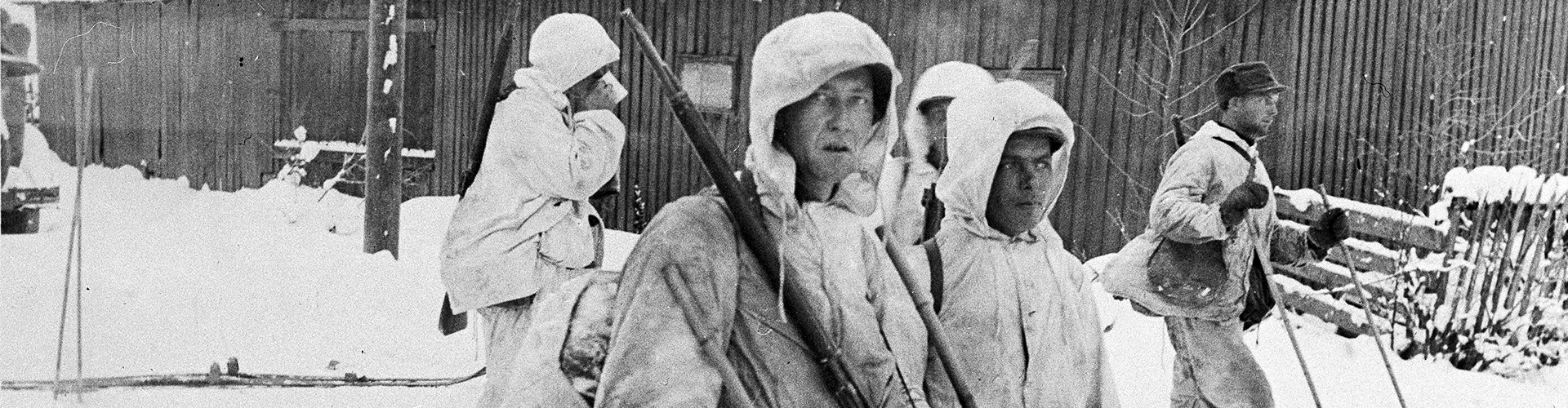
Examples from Ladoga Karelia
In Ladoga Karelia, the 4th Army Corps stopped the Soviet troops advancing towards Sortavala. The left flank of the Corps was protected by the troops in Kollaa River. Front in the Kollaa river enduring made it possible for other troops to attack the flank of the Soviet troops advancing along the northern bank of the Lake Ladoga. The attacks were used to encircle the enemy in smaller pieces, encirclement pockets called "motti". Some of the mottis in Ladoga Karelia were successfully destroyed, but others held their ground until the end of the war.
Tolvajärvi
The Red Army crossed the border in Ladoga Karelia at Suojärvi as soon as the Winter War began. Such a massive attack took the Finns by surprise and the defending four infantry battalions retreated. There were only a few east-west highways running through the area, which the Red Army used as an offensive route. The roads led to Värtsilä, from where the road network would have expanded and opened up a route to the rear of the Finns fighting on the Karelian Isthmus.
The first offensive victory of the Finnish side in Winter War was achieved at Tolvajärvi. A Finnish division led by Colonel Paavo Talvela defeated the Russian 139th Division advancing towards Korpiselkä in the battles of 12th of December 1939. Finnish casualties in the day's attack were about 100 killed. Ten times as many Russians were killed in the battle.
The frontal attack from the west into the terrain of the Tolvajärvi tourist cabin proved decisive. The Finns captured guns worth of two artillery batteries, 20 tanks and 60 machine guns. The succesfull attack increased the confidence of the entire Finnish Defence Forces.
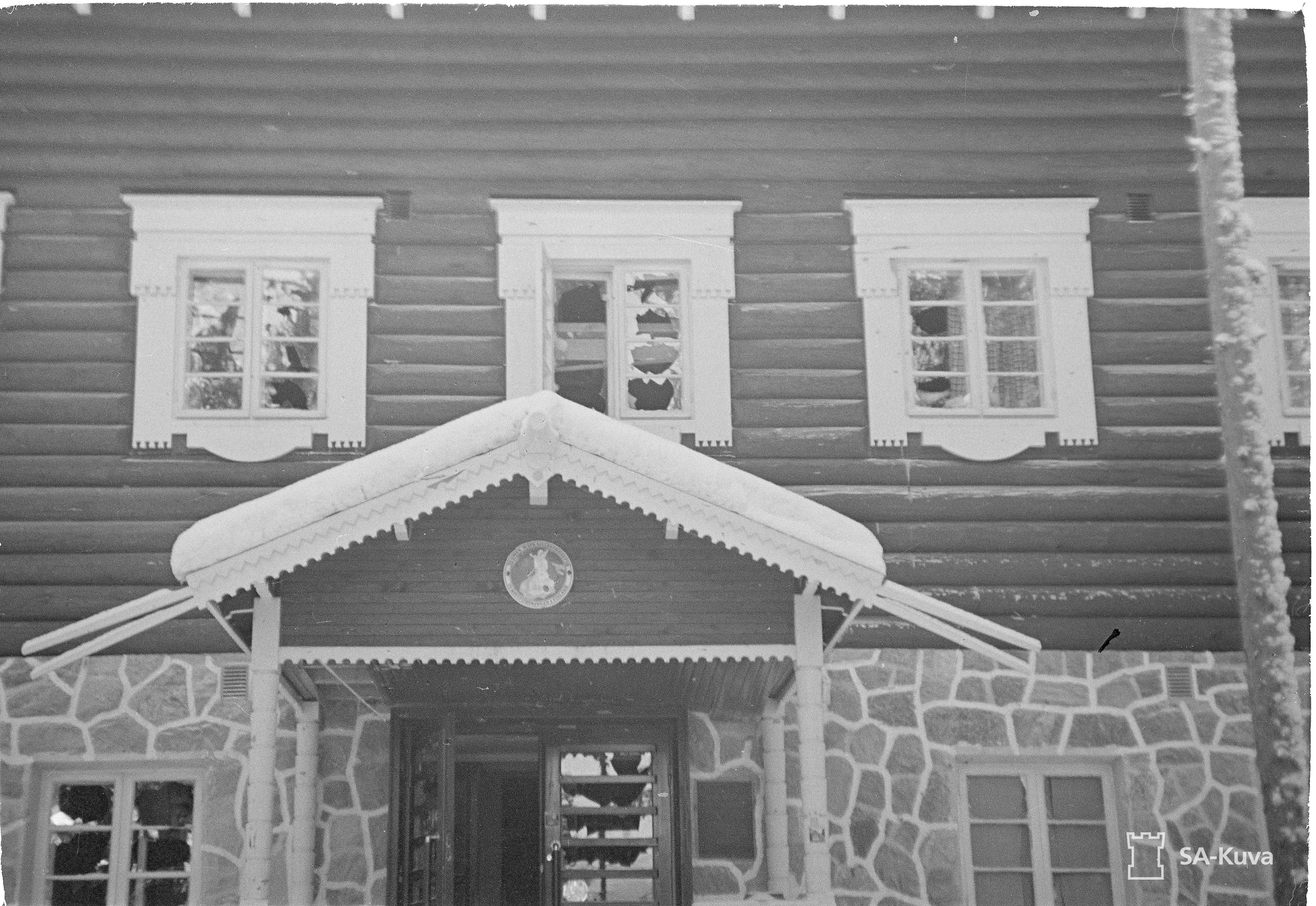
Tolvajärvi tourist cabin.
Kollaa
The Soviet 8th Army was concentrated between Lake Ladoga and Village of Repola. It consisted of six infantry divisions and one armoured brigade.The strength of the 8th Army was about 120 000 men, about 400 armoured vehicles and almost 600 guns or mortars. Its objective was to advance behind the Finnish troops on the Karelian Isthmus. One of the key battlefields was the Kollaa River, where the Red Army troops arrived on 7th of December 1939.
Kollaa had to endure. Otherwise, the situation north of Ladoga would have become untenable, and the defence of the Karelian Isthmus would have been jeopardised. Both sides knew the significance of the Battle of Kollaa. The Russians therefore tried to penetrate Finnish lines over the river from December onwards, and the Finns held their ground with equal tenacity. The last major offensive of the Red Army's 4th Division began on 2 March 1940. The opponent was the exhausted Finnish 12th Division, commanded by Colonel Svensson. A Finnish soldier made the small Kollaa river into a big one. Entrenchment war continued on the Kollaa until the end of the Winter War on 13th of March 1940.
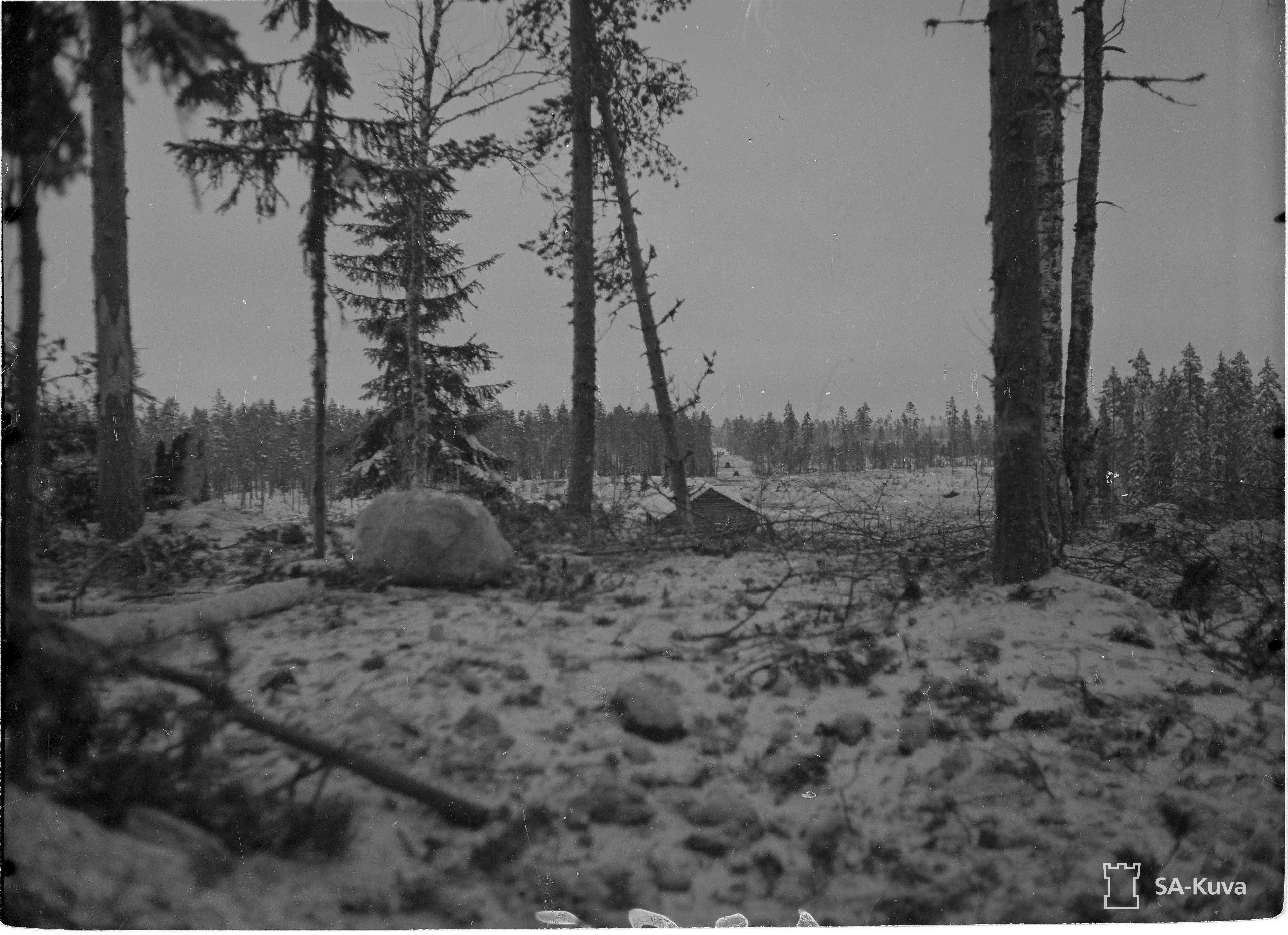
Näkymä Kollaalta. Horisontin tieurassa tuhottuja Puna-armeijan panssarivaunuja.
Laatokan pohjoisrannan motit
The 4th Army Corps, commanded by General Major Hägglund, stopped the Red Army divisions attempting to ambush the troops on Karelian Isthmus through Ladoga Karelia at Impilahti and Suistamo.
A large counterattack by the Finns arched from the north towards the shores of Ladoga. This gave rise to the mottis (Kitilä, Kelivaara, Rykmentin and the East and West Lemet motes), of which the Eastern Lemetti motti became the most famous. The encirclement pocket of Eastern Lemetti was destroyed by the Finns on 29th of February 1940.
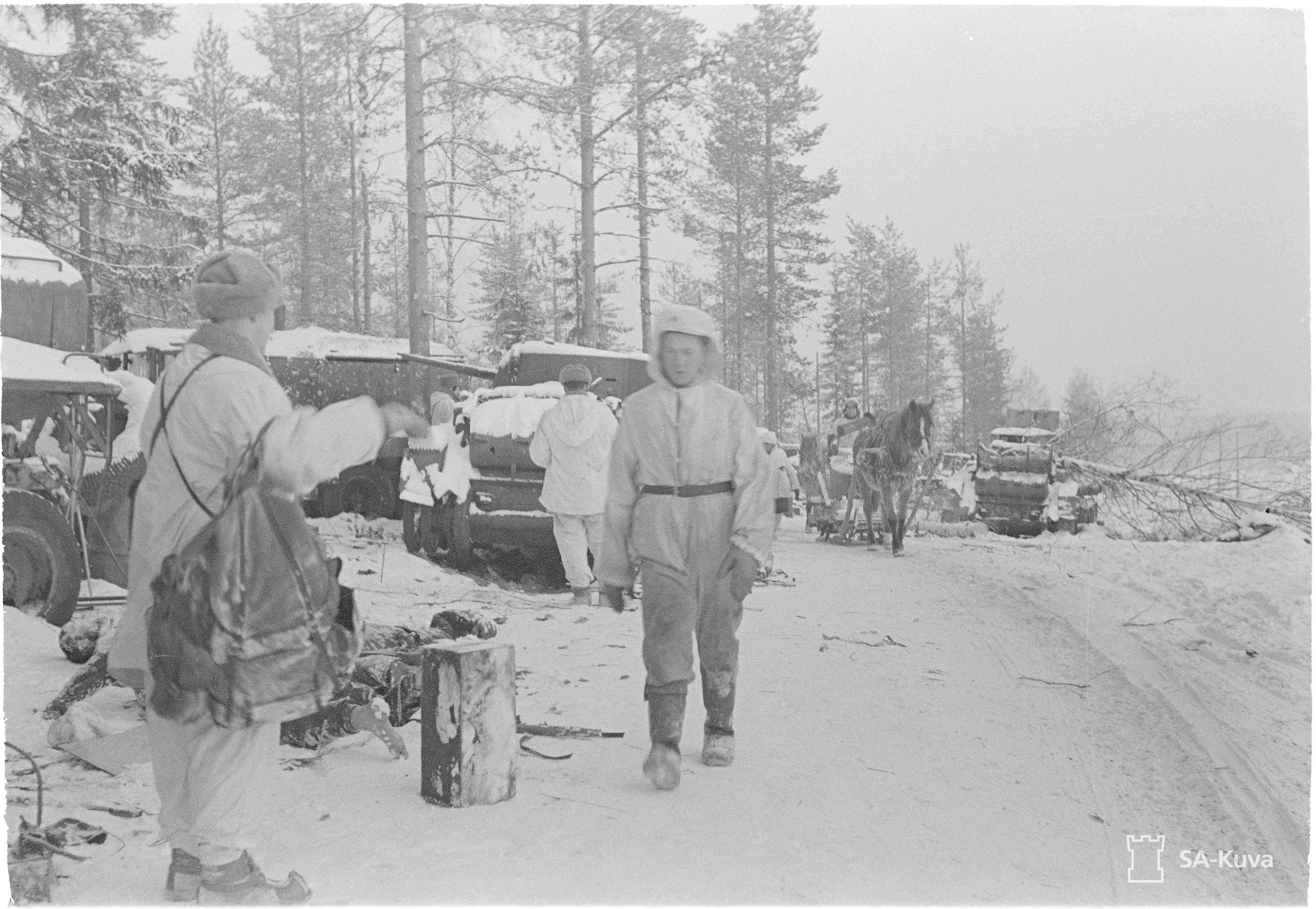
Sotasaalista Lemetissä.