
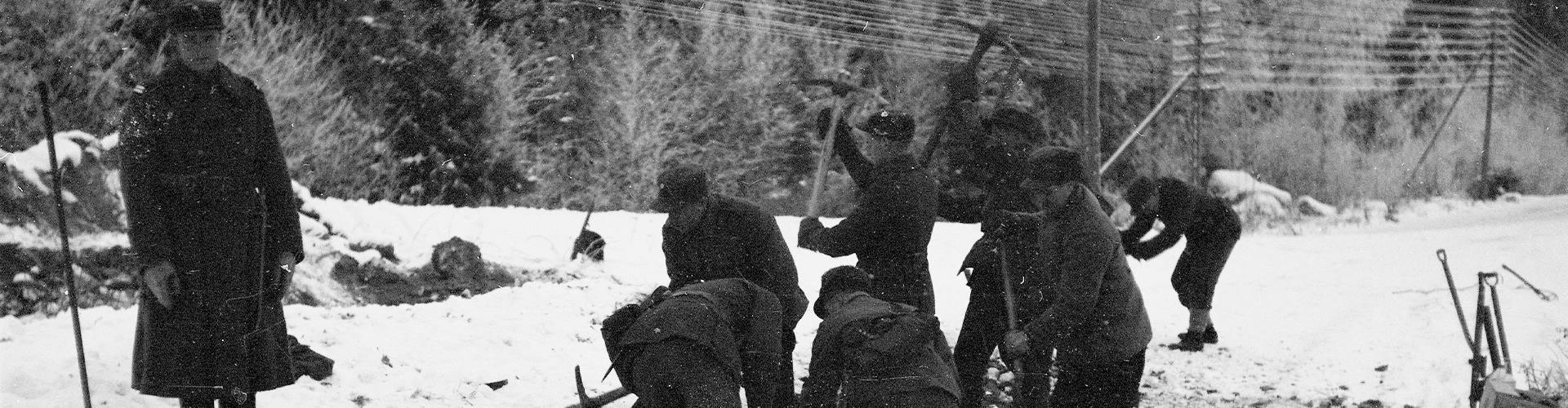
Plans for the fortification of the Karelian Isthmus were made already in the spring of 1939. In June, Lieutenant Colonel Otto Bonsdorff of the Engineer Corps was appointed to lead the volunteers of the fortification task force. The voluntary fortification works, which lasted until early October, resulted in the creation of stone and trench barriers that made it difficult for tanks to operate.
The engineers had made the demolishion preparations for the main attack routes as far away as Viipuri and Vuoksi river. The engineer units of the defending forces supplemented the demolishion preparedness by staking out various sites. Demolishion preparations were carried out both on the border and at the rear. During the summer and autumn of 1939, the engineers also built roads and various bridges.
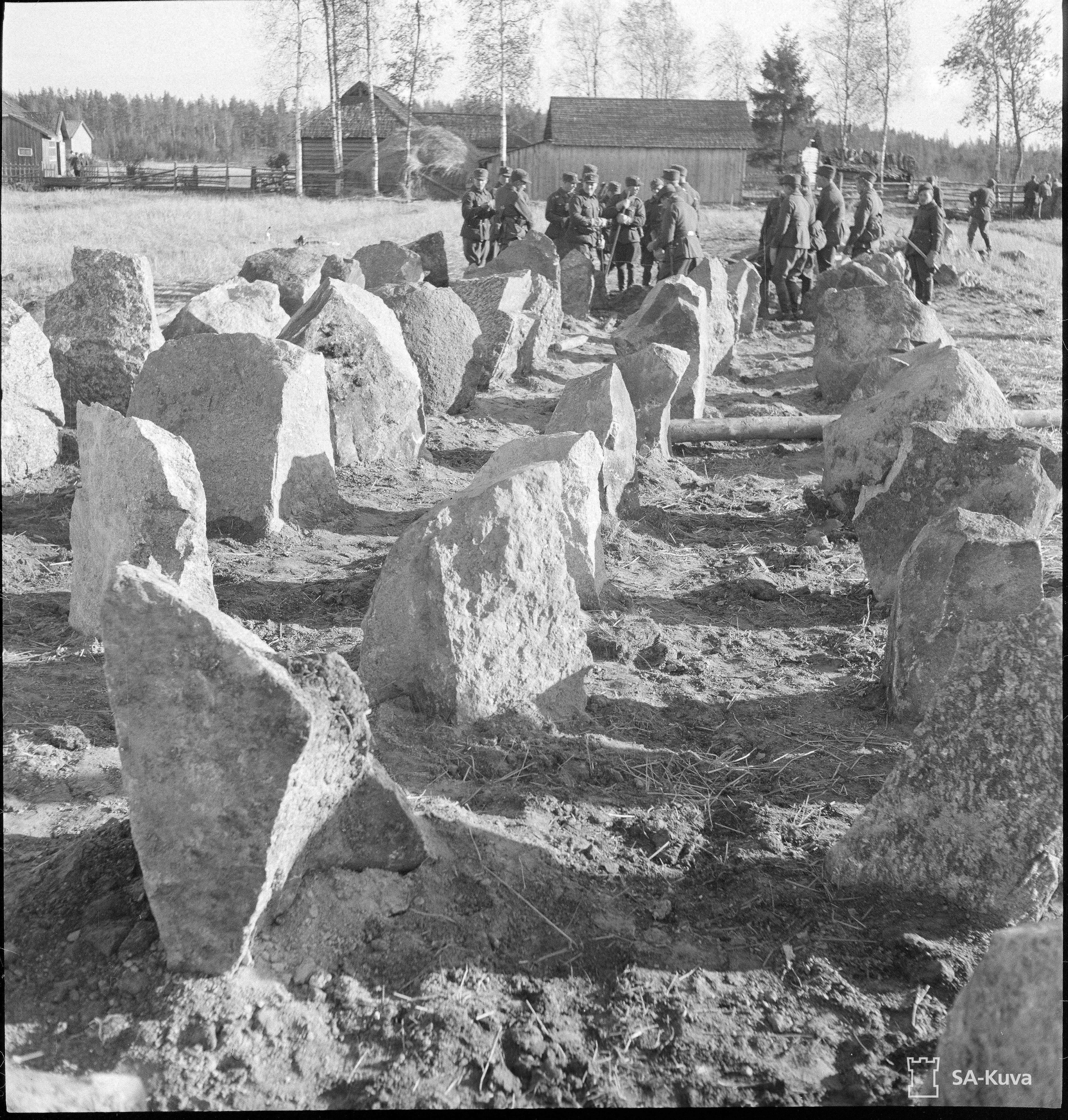
Tank trap stones being laid down in summer 1939.
Three companies of engineers and four teams were formed for readiness units in September 1939. In October, the military districts formed other engineer corps from reservists. In January 1940, the Engineer Corps consisted of six Engineer battalions and 27 Engineer companies. The combined strength of the Engineer Corps and the Headquarters Fortification Office was just under 14 500 men.
The combat units consisted of engineer battalions and and separate engineer companies. The basic formations of divisions and armies included two engineer companies and engineer supply formations. The army corps also received the necessary road repair, bridge-building and ploughing troops as subordinates. The detached infantry battalions were supported by separate engineer detachments.
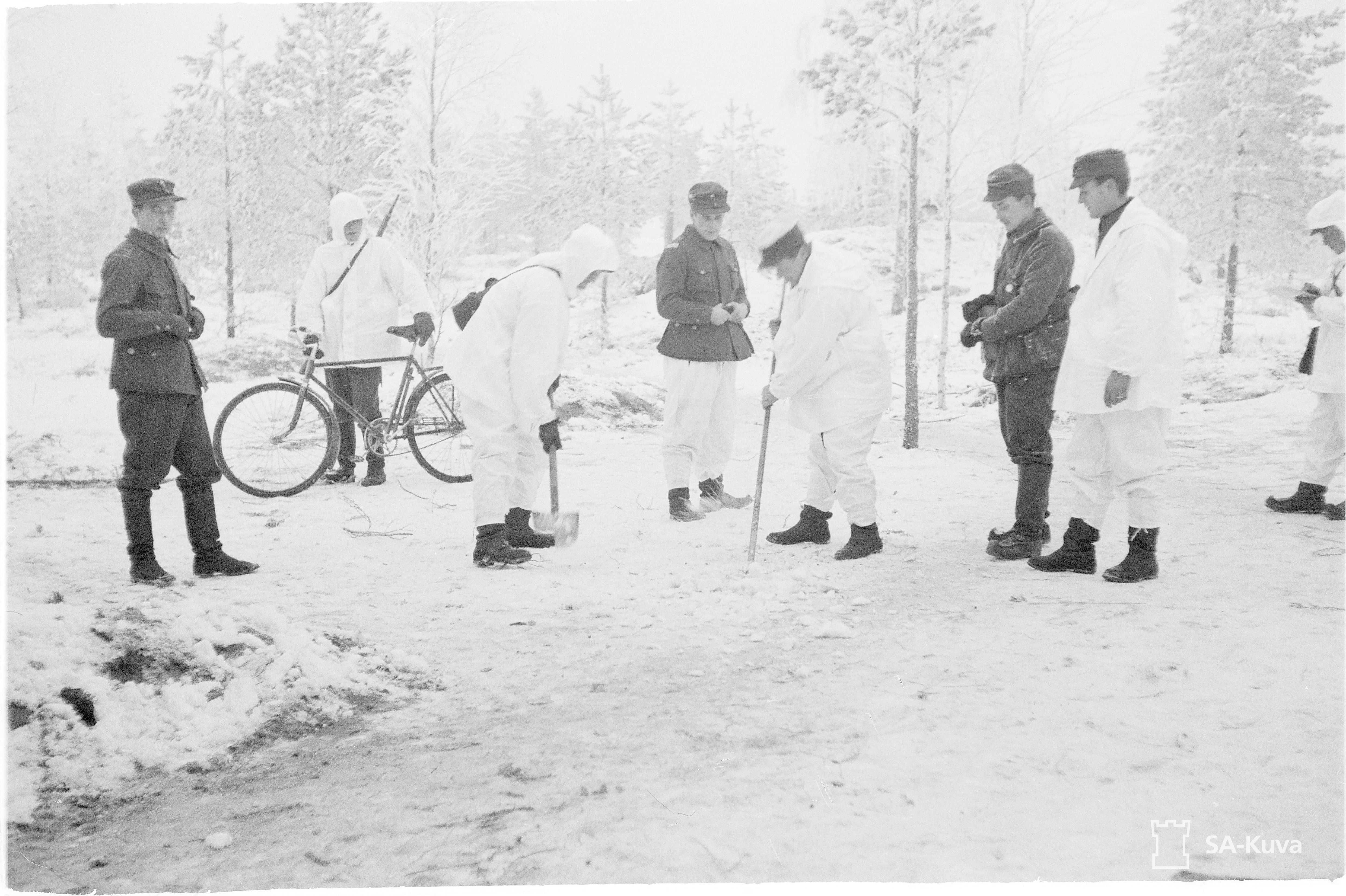
Mines being laid in Summa 14th of December 1939.