
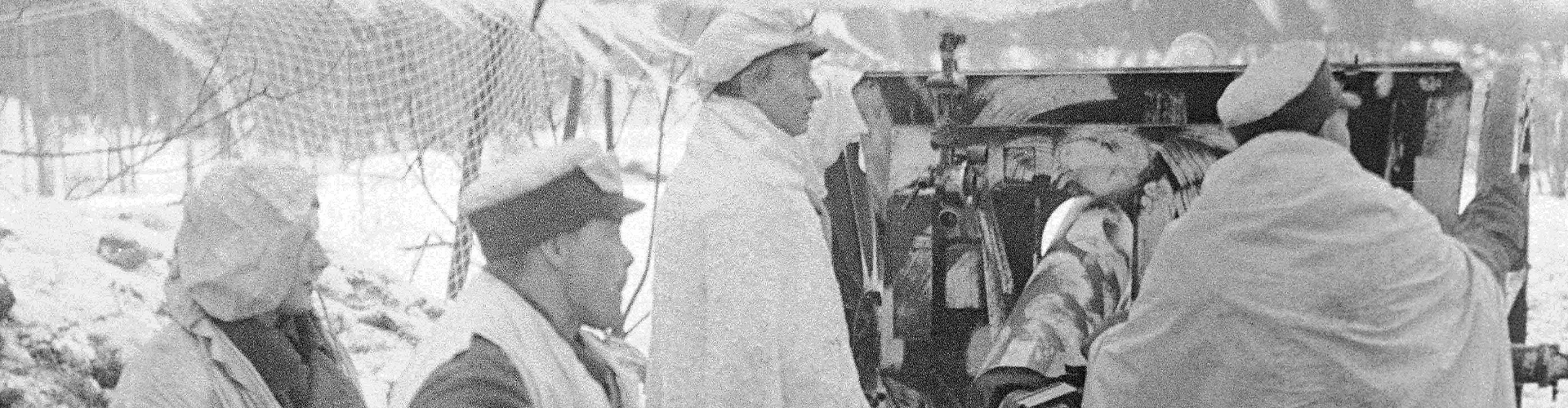
Finnish field artillery proves it's effectiviness
Under the leadership of artillery general Vilho Petter Nenonen, artillery firing methods had been developed to a high level in the 1920s and 1930s. The Finnish artillery was capable of rapid fire and accurately fired its small grenades. Equipment losses were minimal because the enemy could not locate and destroy artillery fire positions.
Often, even a few accurately fired grenades succeeded in breaking up an enemy attack. Co-operation with the infantry, on the other hand, was poor, especially in the early stages of the war.
There had been too few joint exercises between the different branches. The front line fire observing was hampered by a lack of communications equipment. Towards the end of the war, cooperation between the branches improved.
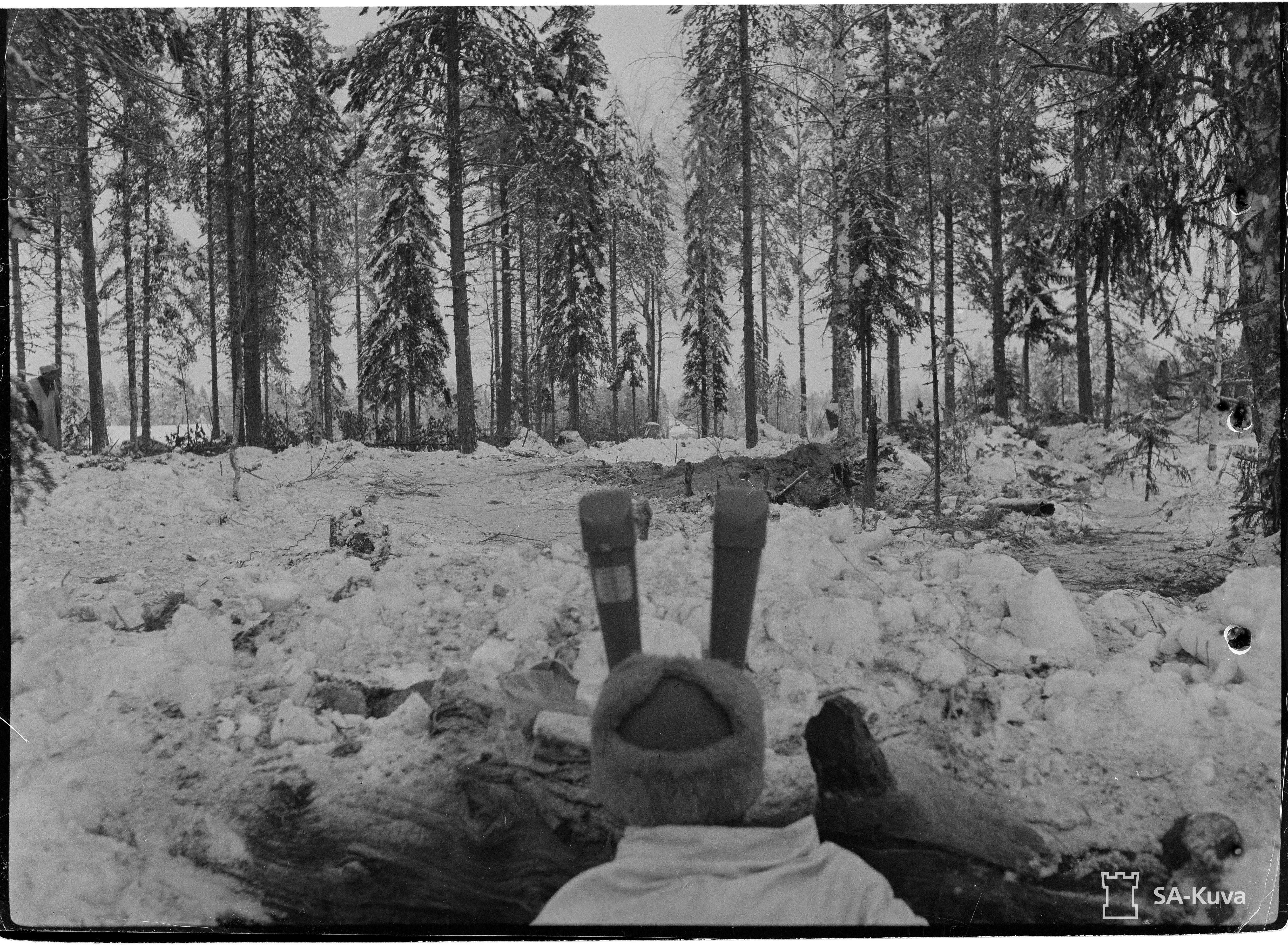
Artillery observer in Kollaa.
Training
There were five artillery training centres in operation at the end of the war to train new gunners. Due to the shortage of guns, some of the gunnery training had to be carried out using wooden guns. However, the training centre system proved to be a good one and was also used in the Continuation War.