
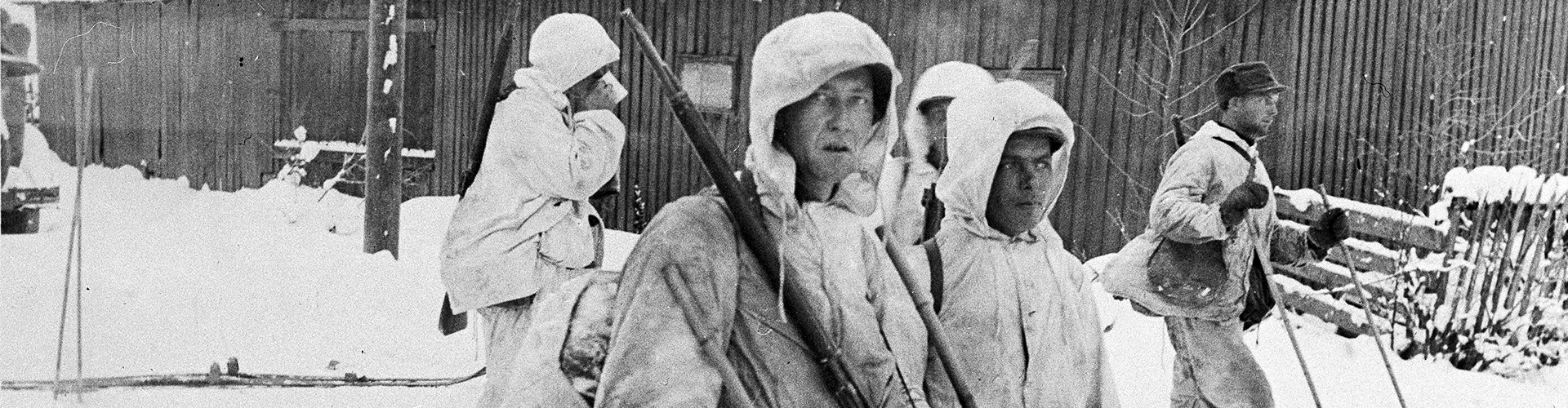
Examples from the Northern Front
The Red Army intended to cut Finland in two at the narrowest point. Then the fighting in the north would have been easily resolved, and the troops could have concentrated on conquering southern Finland. Finland would also have lost its land border with Sweden.
Petsamo
The Red Army managed to capture a large area of Petsamo, but its advance deeper into Lapland was halted. In the Petsamo area, the Detachment Pennanen, led by Captain Antti Pennanen and consisting of three companies, fought. At the beginning of the war, Detachment Pennanen was opposed by the 104th Mountain Division, and in later stages by the 52nd Division.
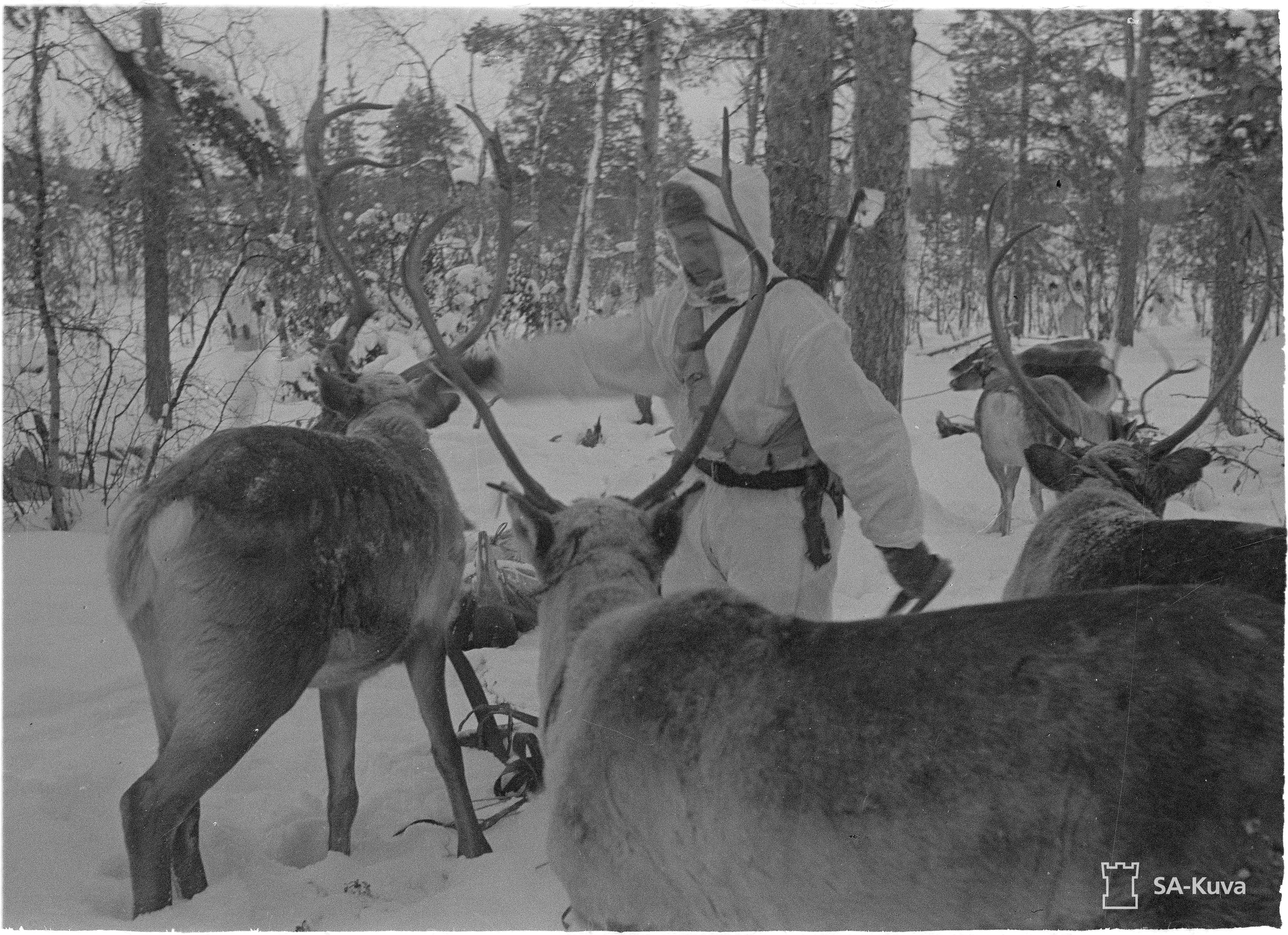
Patrol with reindeers in Petsamo 2.1.1940.
Pelkosenniemi
At Pelkosenniemi, the Lapland group stopped and repelled back the Red Army troops who had reached the furthest part of Finnish territory. The fighting took place from 16th to 19th of December 1939, after which the enemy retreated back across the border via Savukoski.
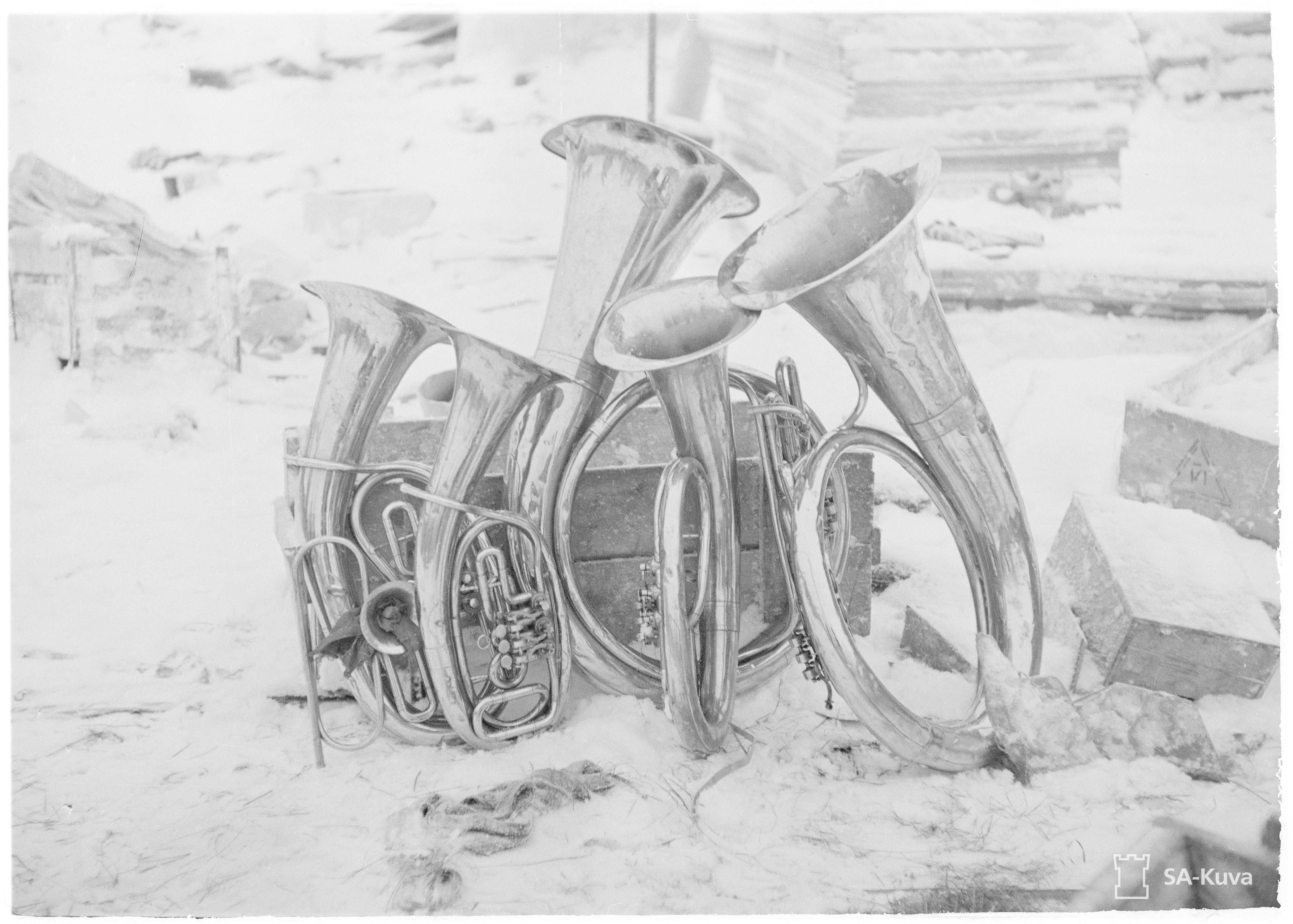
Spoils of war in Pelkosenniemi.
Salla
122nd Division of the Red Army had an objective to advance through Salla towards Kemijärvi and Sodankylä and from there to Rovaniemi. From Rovaniemi the attack was to continue towards Tornio. On 13th of January 1940, separate battalions of the Lapland Group, commanded by Kurt Wallenius, intercepted the 122nd Division at Kemijoki, after which the Red Army troops retreated to the village of Märkäjärvi.
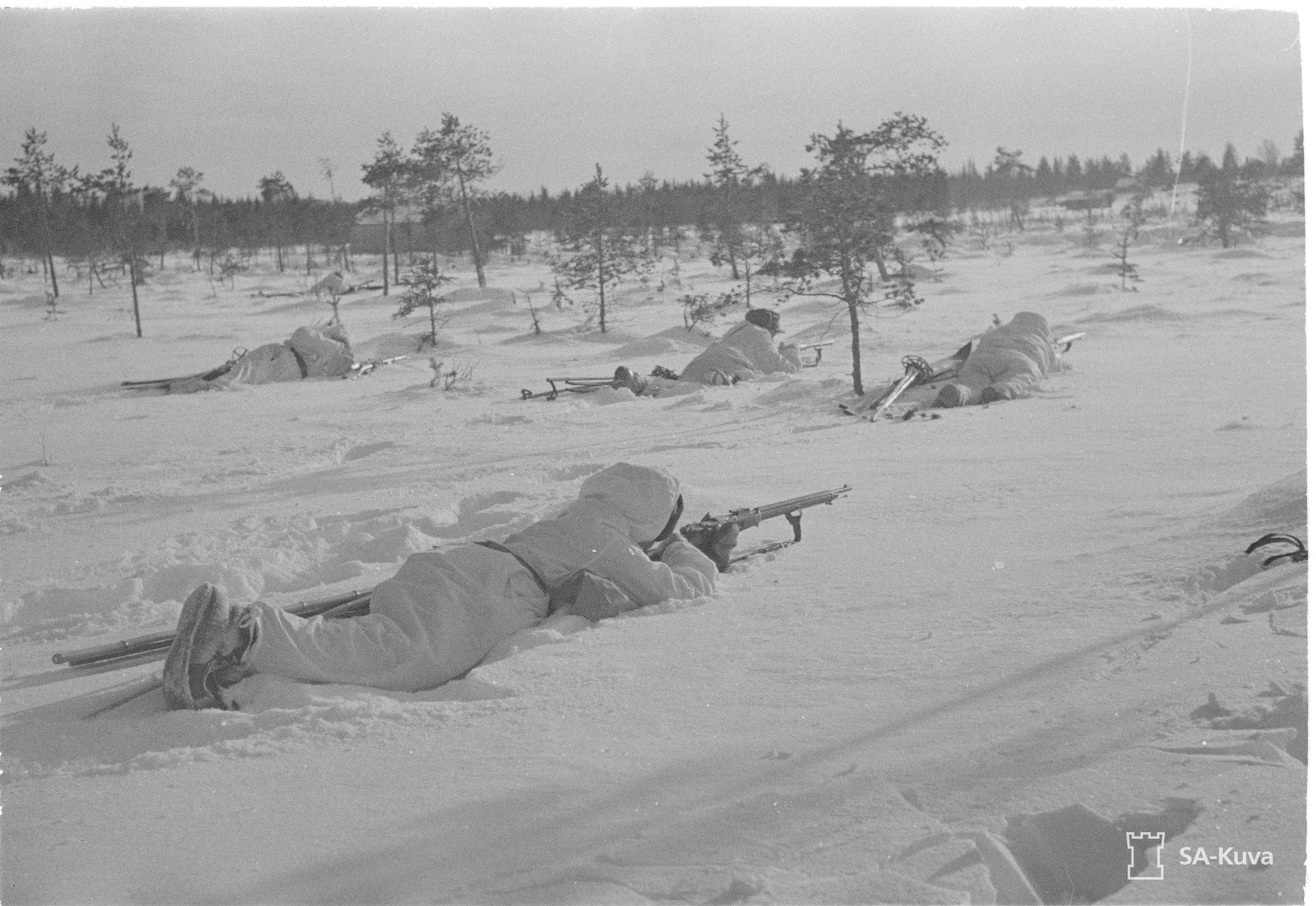
Finns in Salla in February 1940.
Raatteen tie ja Suomussalmi
The Suomussalmi - Raatte double operation started on 7.12.1939 when the 163rd Division of the Red Army advanced through Juntusranta to Suomussalmi Church. After the Finnish troops gained the upper hand on 28.12.1939, the Russians retreated along the Kiantajärvi ice to Juntusranta, where they had started the attack. According to a Finnish estimate at the time of the war, the division lost almost a third of its strength in casualties, about 6,000 men.
In late December the 163rd Division got assistance from 44th Division that attacked from the east of Suomussalmi church on the Raate road. Division. After the Finns defeated the 163. Division in early January Finnish efforts were put on attack against the 44th Division in Raate road.
The battles on the Raate road are an excellent example of the effectiveness of the blockade and encirclement tactics used by the Finns. The most important thing was to cut off the supply line. After that, the enemy was tied up in small battles and cut to pieces by light assaults. The Finns defeated the heavily armoured and heavily artillery supported 44th Division with almost no artillery of their own. The Soviet troops relied on their own vehicles, which in the end proved ineffective against skiers in snow suits on small roads.
The fighting on the Raate road ended in a significant Finnish victory. For the Finns, the threat of the country being cut in two had been averted. The Finns received as spoils of war, among other things:
- 4822 rifles
- 190 automatic rifles
- 106 machine guns
- 29 anti-tank guns
- 71 field guns and anti-air guns
- 43 tanks
- 10 armored cars
- 16 anti-air machine guns
- 1170 horses
- 260 trucks
- 20 tractors
- 15 motorcycles
- 47 field kitchens
- 2 cars
- 1 airplane
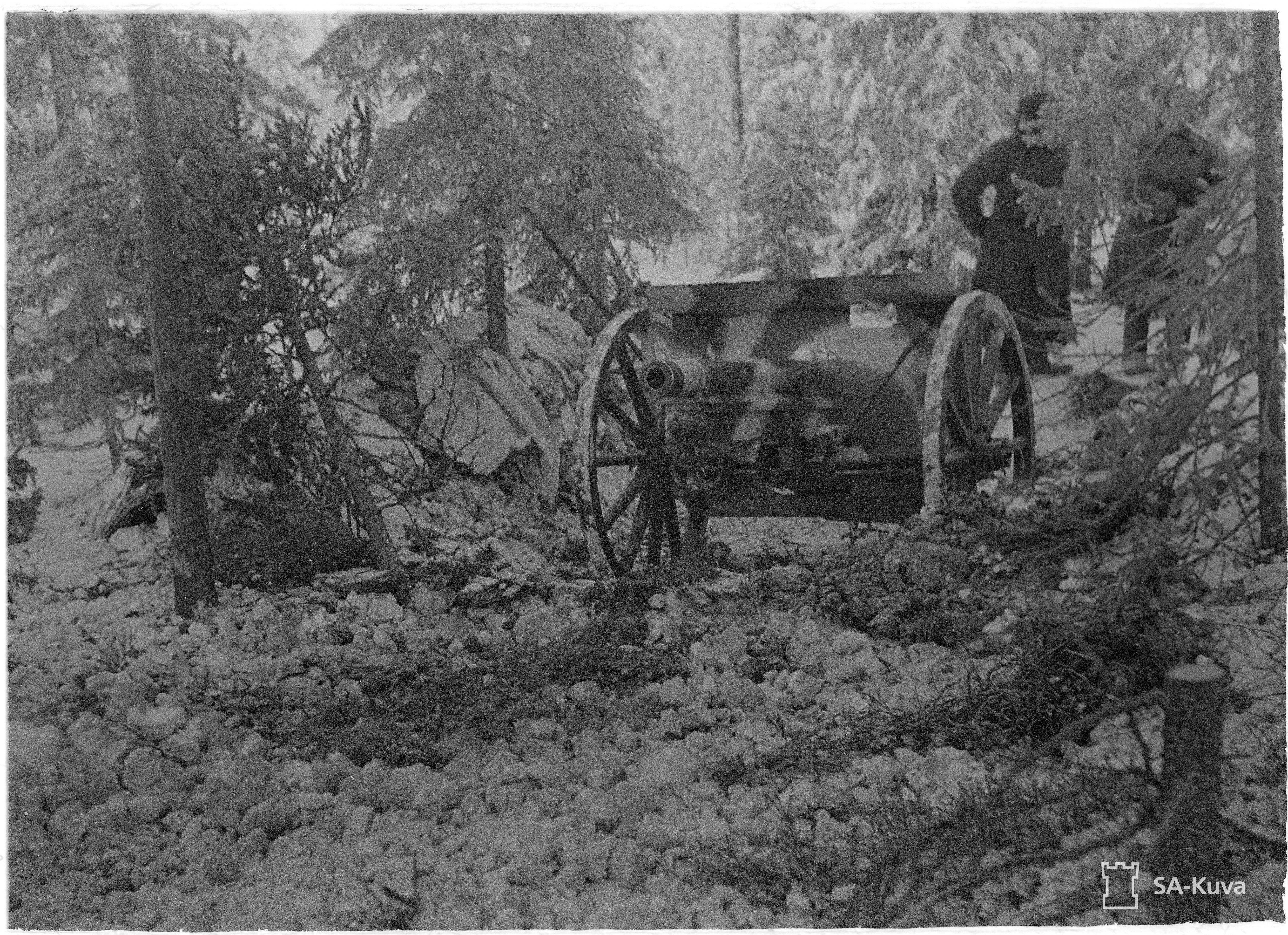
76 K 02 -cannons were used as anti-tank guns in Suomussalmi
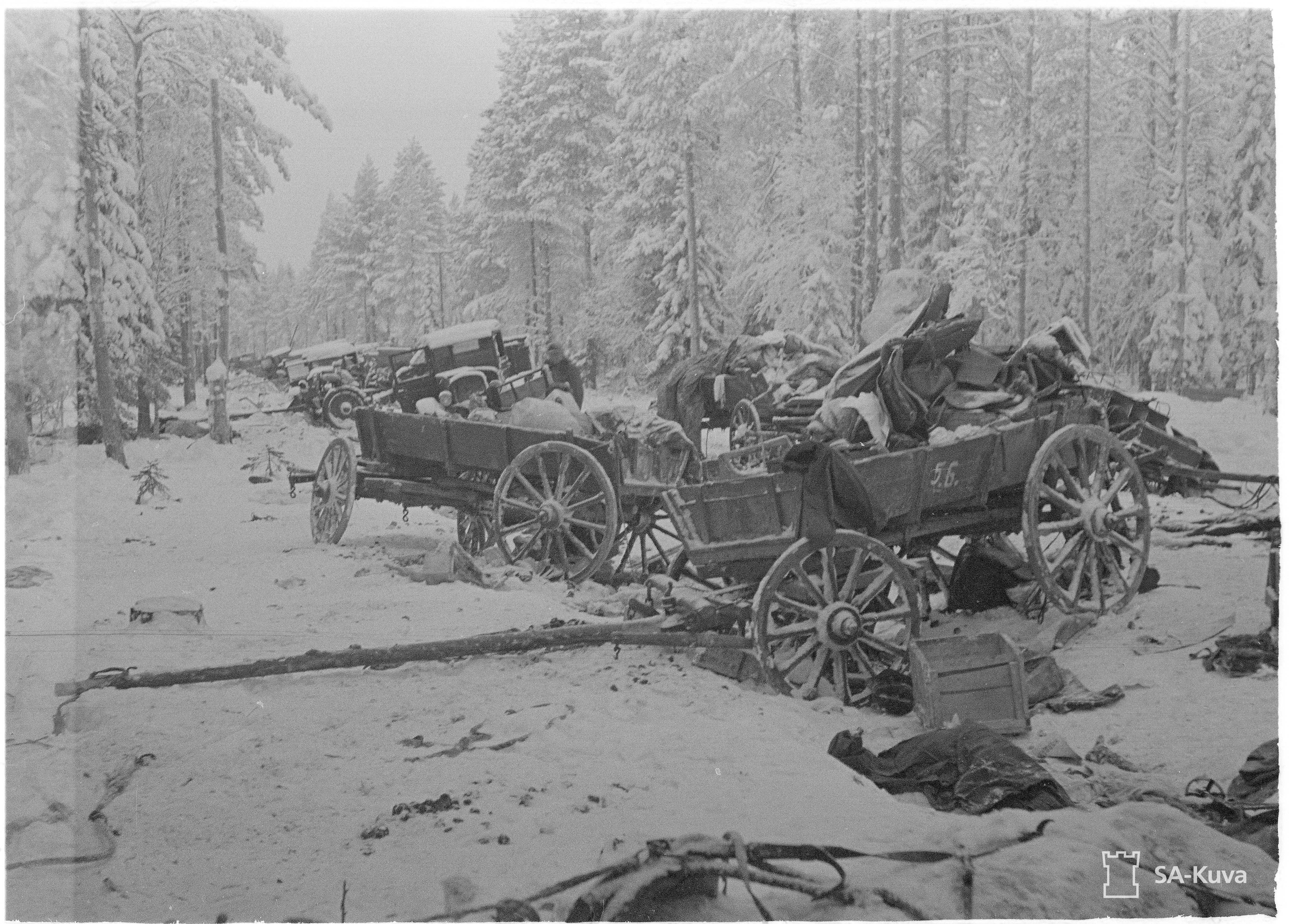
Spoils of war from Raate road.
Kuhmo
Immediatelly at the start of the war the 54th Division of the Red Army attacked Kuhmo, whose main objective, like the 44th and 163rd Divisions that had attacked Suomussalmi, was to capture Oulu. The Finnish Detached Battalion 14 stopped the division's attack south of Kuhmo's church village.
After the battle of Suomussalmi, the Finnish 9th Division moved to Kuhmo. The 9th Division surrounded and cut the troops of the Red Army's 54th Division into several encirclement pockets or "mottis". However, not all of the mottis could be destroyed during the war.
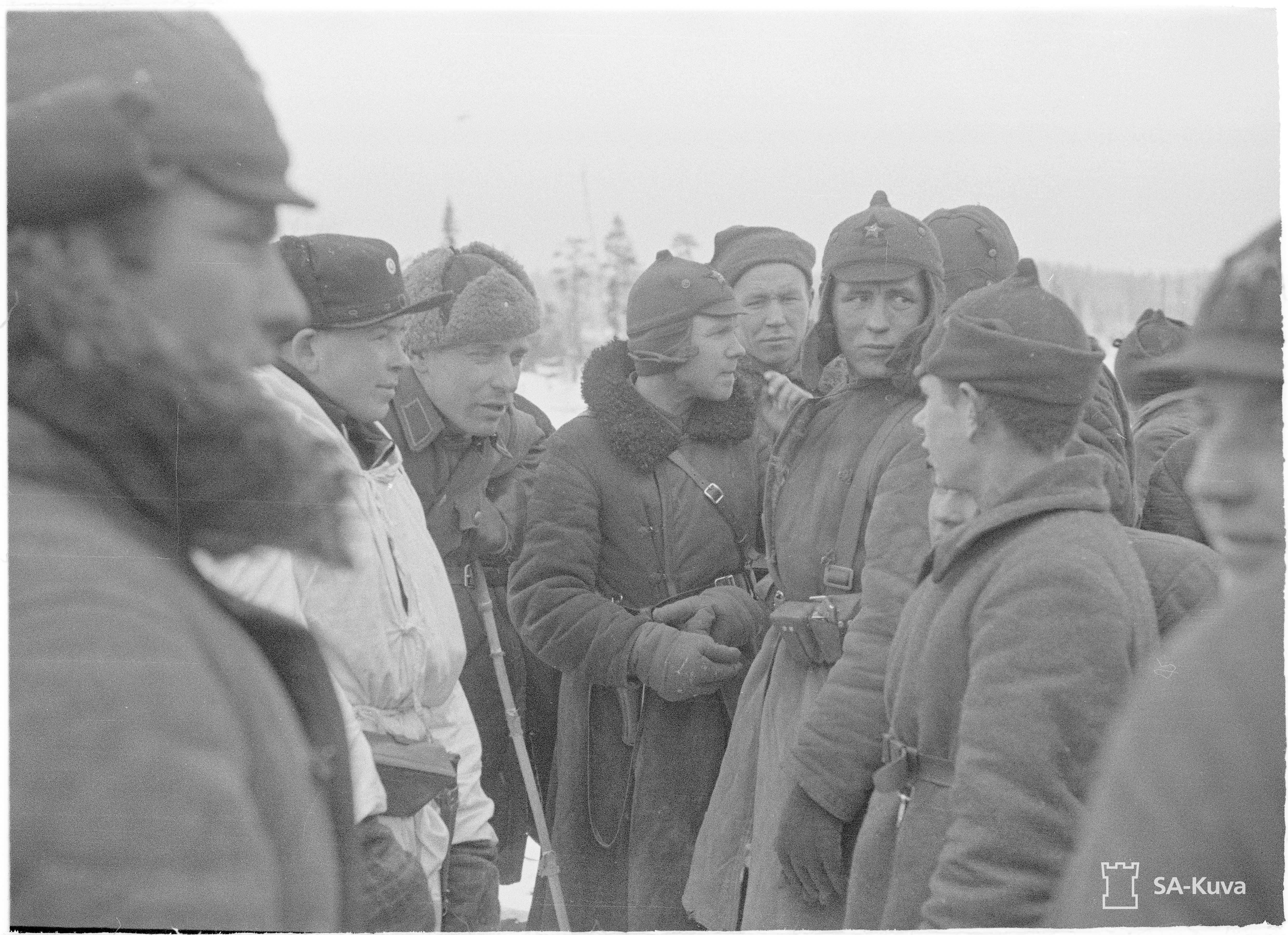
Finnish and Russian soldiers in Kuhmo after the peace.