
Battle of Tali and Ihantala
Finnish and German Troops
- IV Army Corps
- 3rd Brigade
- Light artillery battalion 23
- Heavy artillery battalion 33
- 3rd Division
- Field Artillery Regiment 16
- Engineer Battalion 34
- Signals Battalion 31
- 4th Division
- Field Artillery Regiment 1
- Heavy artillery battalion 22
- Engineer Battalion 25
- Signals Battalion 25
- 18th Division
- Field Artillery Regiment 19
- Heavy artillery battalion 26
- Engineer Battalion 23
- Signals Battalion 24
- 11th Division (from 27.6.1944)
- Field Artillery Regiment 4
- Heavy artillery battalion 30
- Engineer Battalion 28
- Signals Battalion 32
- 6th Division
- Field Artillery Regiment 14
- Engineer Battalion 36
- Signals Battalion 35
- 3rd Brigade
- Armored Division
- Heavy artillery battalion 14
- Engineer Battalion 2
- Signals Battalion 6
- German Air Detachment Kuhlmey
- German Assault Gun Brigade 303
Red Army Troops
- Soviet 21st Army's 15 Divisions
- Soviet XXX Guards Army Corps
- Soviet XCVII Army Corps
- Soviet CVIII Army Corps
- Soviet CIX Army Corps
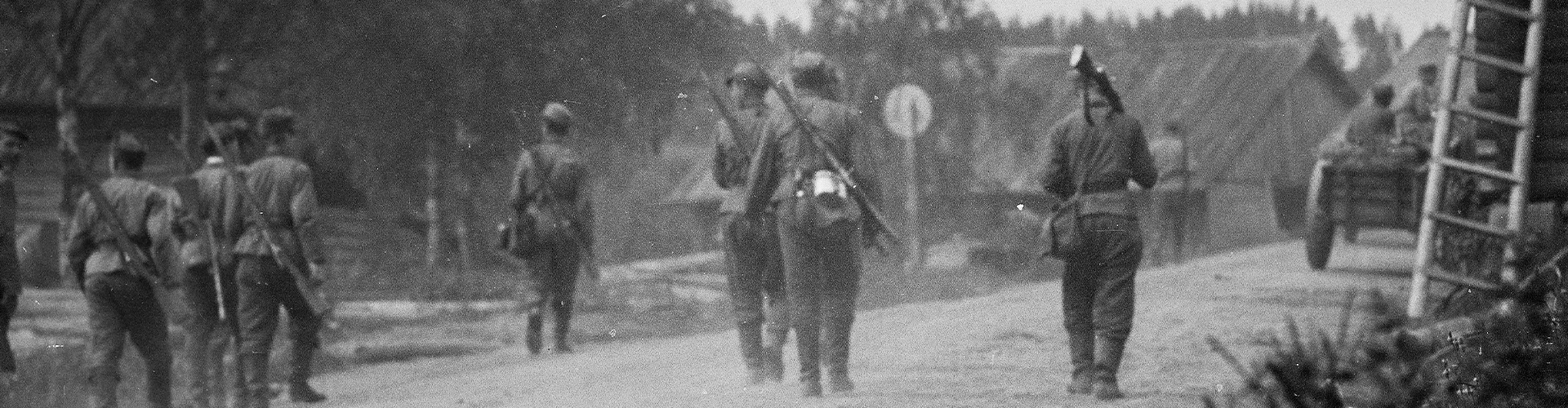
From Viipuri, the Red Army's attack was directed northeast of the city. A major battle was fought in the Tali-Ihantala area starting from June 25, lasting for a couple of weeks, involving about 150,000 Soviet and 50,000 Finnish soldiers. In addition to numerical superiority, the Red Army had strong artillery and tank forces at its disposal. In heavy fighting, the Red Army's advance was halted. By mid-July, the front line in Ihantala had stabilized, and the Red Army also regrouped for defense.
Many factors contributed to the defensive victory. Although the positions were hardly fortified, the terrain allowed for effective anti-tank defense with "panssarinyrkki" (Panzerfaust-like weapons) and "panssarinyrkki" (recoilless rifles/Panzerschreck-like weapons). The contribution of the Armored Division was significant. The Finnish Air Force and the German Air Detachment Kuhlmey destroyed bridges and tanks and attacked enemy infantry and artillery firing positions. Finnish artillery also supported the air force by firing at enemy anti-aircraft positions just before bombing raids. The concentrated fire of artillery and mortars was crucial for the success of the defense. New anti-tank weapons and strong artillery support also boosted the infantry's morale, which was an important factor in the defensive battle.
The infantry bore the brunt of the bombings, artillery concentrations, defensive battles, and counterattacks. Finnish casualties in the major battle were approximately 8,500 men, including about 1,100 killed, 1,100 missing, and 6,300 wounded. The Red Army lost approximately 22,000 men killed and wounded, most of whom were affected by indirect fire.
Field Artillery in the Battles of Tali-Ihantala
Artillery achieved its greatest effectiveness in the battles of Ihantala. Three artillery groups were formed from the artillery in the area. In addition, a few other artillery battalions were able to support the battle in the sector. Theoretically, it was possible to concentrate the fire of 21 artillery battalions and one heavy battery, i.e., about 250 guns, on the Ihantala sector. Since fire was also needed for neighboring sectors, in practice, the fire of 6–10 artillery battalions and closely cooperating mortar units was usually concentrated.
In the battles of Tali-Ihantala, the Red Army's attack formations were broken up dozens of times by artillery and mortar fire. The highest ammunition consumption was on July 3, when the artillery fired approximately 11,500 rounds in Ihantala. Over two weeks of fighting, consumption rose to about 120,000 shells. The number of shells fired by the Finns was small compared to the Red Army's consumption. However, the effectiveness of fire also depends on its density, i.e., the time in which the amount of shells is fired at the target. In Ihantala, the density of fire in the target area was made so high that even tanks were destroyed. In the rocky terrain, the shrapnel effect on attacking infantry was truly devastating.