
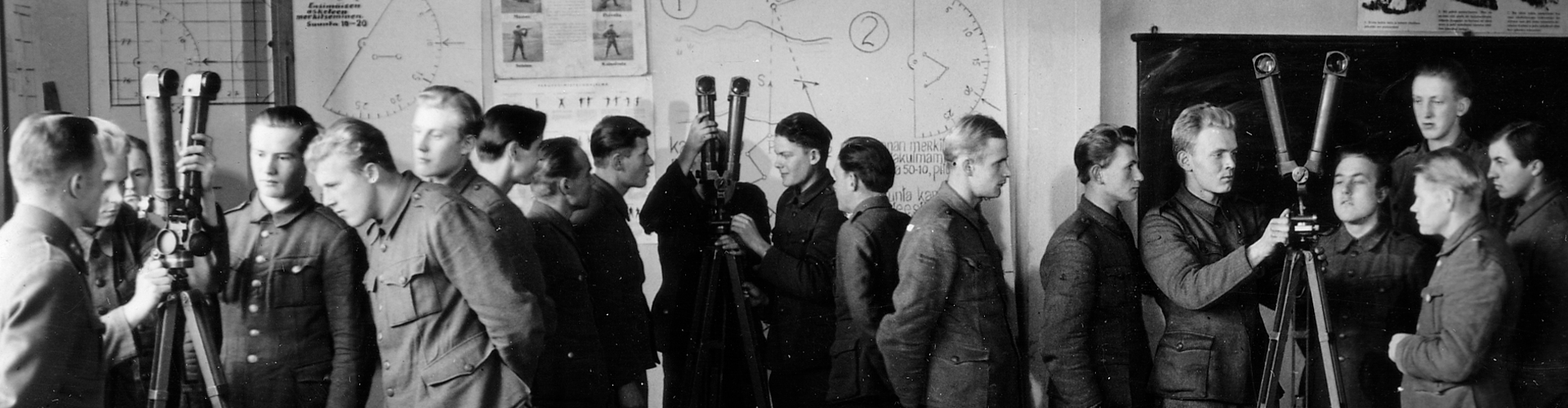
The Years of Danger
The years following the Continuation War, which were uncertain both in domestic and foreign policy, have been referred to in Finland as the Years of Danger. Finland feared the fate of the Eastern European countries that had been occupied by the Soviet Union and had become socialist states. The Allied Control Commission supervised compliance with the terms of the armistice in Finland. According to the peace terms, communist activities were once again permitted, and in the parliamentary elections of spring 1945 the left achieved an electoral victory. The Porkkala naval base, ceded to the Soviet Union, was located only a few dozen kilometres from Helsinki. In May 1945, a weapons cache hidden in preparation for a possible occupation was uncovered. Fulfilling the terms of the peace agreement required war responsibility trials. A retroactive law had to be enacted, under which wartime political leaders were sentenced to prison terms.
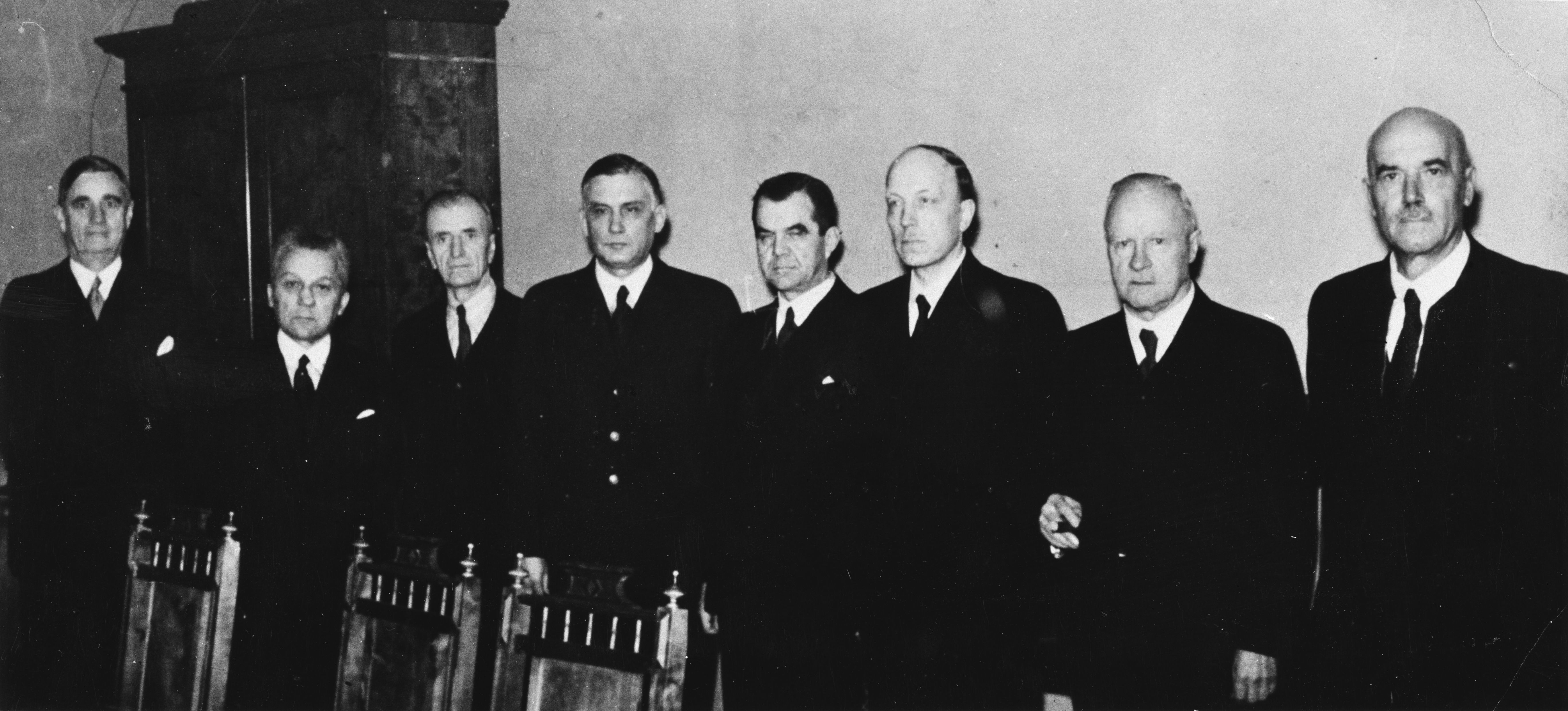
President Risto Ryti was sentenced to 10 years of imprisonment in the war responsibility trial. The concluding words of Ryti’s statement given in court:
“But in serving one’s homeland, the place is not the decisive factor. It can take place just as well in prison as in the presidential palace.”
Paying war reparations required great efforts from Finland. The final war reparations payment was made in 1952. The resettlement of the displaced population forced to leave the ceded territories, as well as the settlement of front-line soldiers, also had to be resolved. More than 94,000 new farms were established on land acquired under the Land Acquisition Act. There was also a severe housing shortage in cities, which required rapid construction efforts. Reconstruction continued until the 1950s.
The Paris Peace Treaty was signed in 1947, and the Control Commission left Finland. In spring 1948, the domestic political situation was considered so threatening that even the Defence Forces prepared to counter internal unrest and even a possible revolution. However, the left suffered a defeat in the parliamentary elections held that spring, and the domestic political situation began to stabilise.
YYA Agreement
As the Cold War intensified, the Soviet Union sought to strengthen its position in Eastern Europe. In February 1948, the Soviet Union proposed that Finland conclude a treaty of cooperation and mutual assistance. The proposal caused concern in Finland, as shortly before this Hungary and Romania had been forced to conclude military agreements with the Soviet Union providing for automatic assistance in the event of an attack. During the negotiations, the Finns succeeded in securing the wording they had proposed for the agreement. The Agreement of Friendship, Cooperation, and Mutual Assistance, known as the YYA Agreement, was signed on 6 April 1948. The agreement stated that if Germany or one of its allies attacked Finland or the Soviet Union through Finnish territory, Finland would fight to repel the attack. The assistance provided by the Soviet Union would not be automatic but would require negotiations. The YYA Agreement remained the foundation of relations between the two countries until the dissolution of the Soviet Union in 1991.
Articles of the agreement concerning military cooperation:
”Article 1: In the event that Finland or the Soviet Union through Finnish territory becomes the target of an armed attack by Germany or any state allied with it, Finland, faithful to its obligations as an independent state, shall fight to repel the attack. Finland shall then use all available forces to defend the integrity of its territory on land, at sea and in the air, and shall do so within Finland’s borders in accordance with the obligations defined by this agreement, if necessary with the assistance of the Soviet Union or together with it.
In the cases mentioned above, the Soviet Union shall provide Finland with the assistance required by the circumstances, the provision of which shall be agreed upon between the Contracting Parties.
Article 2: The High Contracting Parties shall consult with each other in the event that the threat of a military attack referred to in Article 1 has been established.”