
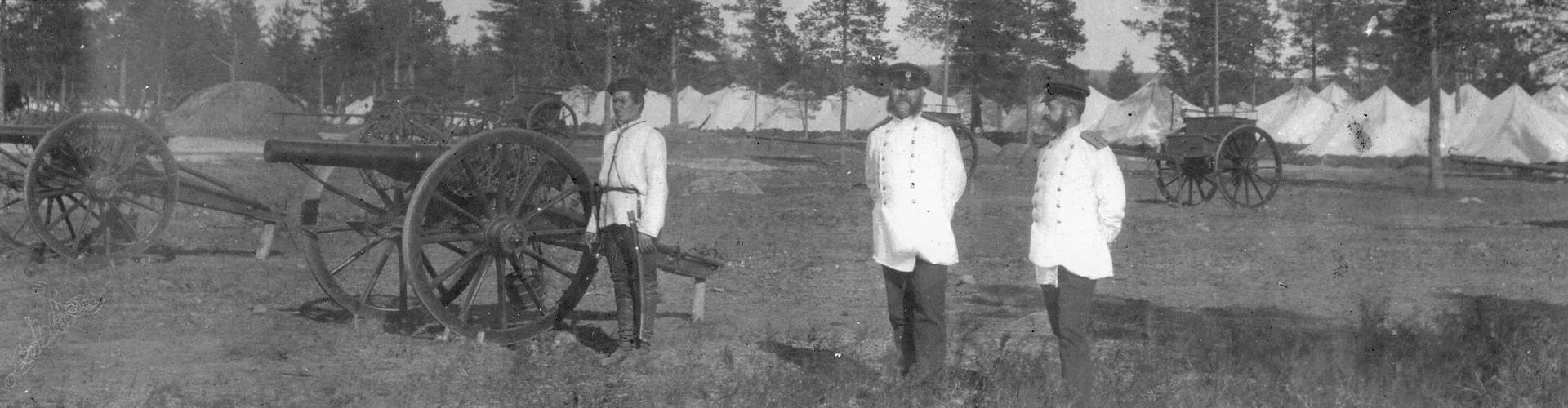
As a result of the Finnish War, Finland became part of the Russian Empire in 1809. Finland was granted autonomous status and its own Senate. The old Swedish legal system and the Lutheran Church were retained within Finland. Later, Finland also received its own postal service and its own currency, the markka. Finland also maintained its own national military forces.
Autonomy transformed Finland into an administrative entity of its own, which was of great importance for the country's political development. The 19th century was also a period of national awakening that fostered the idea of the Finns as a single nation.
Finland’s status as an autonomous Grand Duchy was challenged during the Periods of Oppression of 1899–1905 and 1908–1917, when the Russian Empire sought to Russify Finland. During the first period of oppression, the Finnish military was abolished and Finns were to be incorporated into the Russian Army. This led to widespread conscription strikes. The Governor-General of Finland, Nikolai Bobrikov, was granted dictatorial powers, after which measures were taken against those engaged in passive resistance, including arrests, deportations, dismissals from office, and the closure of newspapers. The first period of oppression ended with the assassination of Bobrikov and the General Strike of 1905.
During the second period of oppression, efforts were made to transfer the decision-making powers of the Finnish Senate and Parliament into Russian hands. The second period of oppression ended with Finland’s declaration of independence on 6 December 1917.