
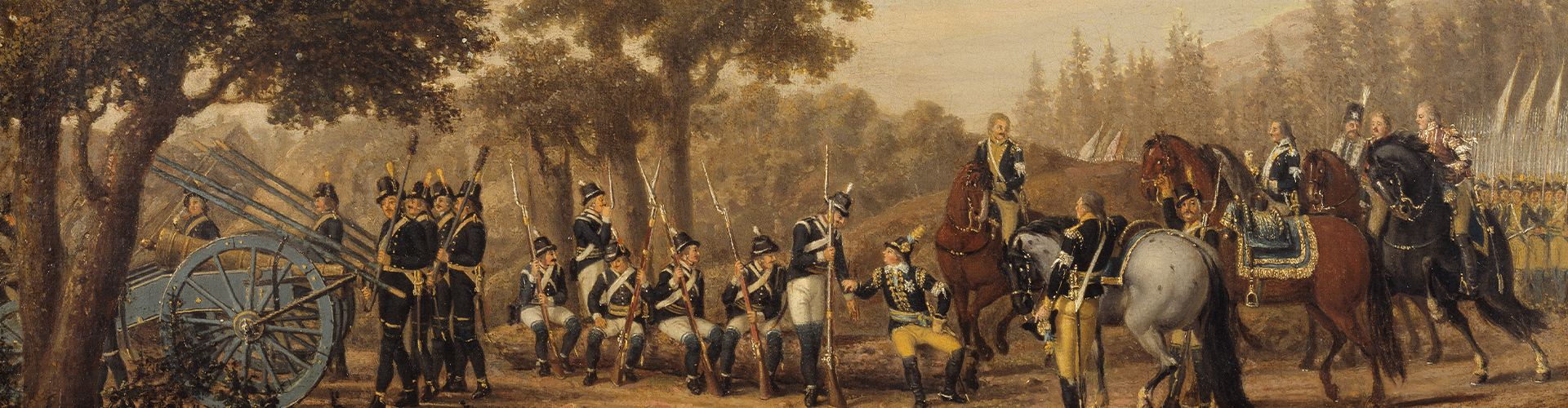
Trebuchets, Chamber Guns, Cannons, Howitzers...
The predecessors of cannons can be considered the mechanical projectile weapons already known in antiquity, which were used to launch both stones and arrows. Various types of catapults remained in use throughout the Middle Ages until gunpowder weapons became widespread.
Gunpowder arrived in Europe no later than the 13th century. In China and elsewhere in the East, it had been known much earlier. Gunpowder was soon adapted for military use, and the first fire lances were already in use during the 13th century. From these simple beginnings, gunpowder weapons evolved into handheld firearms and larger artillery pieces. Weapons clearly identifiable as cannons appeared on battlefields in the early 14th century.
In their early stages, cannons were closely associated both with castles and with siege warfare. This led, particularly during the late 14th century, to the development of enormous artillery pieces known as bombards, specifically designed for siege operations. The caliber of these gigantic weapons could approach one meter. Bombards fired almost exclusively stone projectiles, as their barrels could not withstand the pressure generated by lead or iron shot. As a result, smaller-caliber guns firing stone ammunition also came to be known as bombards.
The early development of artillery also included chamber guns during the early 15th century. A chamber gun consisted of two parts. The powder charge was placed in a separate chamber section, which was attached to the barrel using various lugs and threaded fittings. The main problem was the poor sealing of the joint, making gas leaks dangerous.
The earliest heavy firearms were supported directly on the ground, but soon cannons were mounted on fixed wooden platforms known as carriages. By the mid-15th century, wheels were added to improve mobility. During the latter half of the century, trunnions appeared on cannons, making mounting and aiming easier. Initially, carriages were mostly four-wheeled. During the 16th century, two-wheeled carriages became more common, marking the true separation of field artillery from fortress artillery.
By the 16th century, the muzzle-loading black-powder cannon had developed into three basic forms. Long-barreled cannons fired direct, flat-trajectory shots, while short-barreled, large-caliber mortars fired steep, high-angle trajectories. Howitzers represented an intermediate type between cannons and mortars.
The earliest verifiable records of firearms in Finland date from the 15th century. In 1434, Otto Pogewisch, the German-born lord of Raasepori Castle, requested the loan of two or three chamber guns from Tallinn to protect the castle during troubled times. At least one cannon was delivered to Raasepori, accompanied by an artillery master skilled in its operation, who apparently also trained the castle’s soldiers in the use of the new weapon. The earliest definite documentary evidence of artillery in Finland dates from 1445, when documents belonging to Olavi Niilonpoika Tawast, commander of Häme Castle, listed among the castle’s weapons three handguns and one chamber gun (cannon).
In their early years, cannons were primarily fortress weapons. Their great weight made transportation difficult, effectively restricting them either to castle defenses or to siege operations. From an artillery perspective, Finland’s most important fortress was Viipuri Castle, which received artillery armament at an early stage.
Gunpowder Production
The art of manufacturing gunpowder was adopted in Europe during the 13th century. Black powder was produced by combining saltpeter (potassium nitrate), sulfur, and charcoal. The proportions of the ingredients varied according to their intended use.
Sulfur was obtained from European deposits, although it was not produced in Finland. Sweden also imported sulfur from Central Europe, but domestic sulfur production began during the 16th century.
Saltpeter was produced by composting organic materials such as slaughterhouse waste, manure, and straw. The material was periodically moistened with urine. After a couple of years, the mass was ready for filtering and boiling. Saltpeter was also produced in Finland.
The charcoal required for gunpowder was produced in charcoal kilns. Opinions differed regarding the best wood for gunpowder charcoal, but common raw materials in Sweden and Finland included hazel, linden, and young birch. The French considered peach wood the only suitable material for producing gunpowder charcoal.
The ingredients of gunpowder were ground and mixed in a powder mill using a mortar. The finished powder was then moistened to form grains. Sieving separated cannon powder, musket powder, and pistol powder. After grading, the powder was dried and stored in barrels. Storage posed challenges because gunpowder was highly sensitive to moisture. Once a year, the powder stored in castle cellars was spread out to dry. It was not until the 19th century that powder barrels and containers were lined to make them airtight.
During the late 18th century, methods were developed to produce more uniform gunpowder by compressing the powder mass into cakes and then crushing it again. The process was repeated a second time to make the grains as uniform as possible. The grains were then placed in rotating drums, where they were polished until shiny. By adding graphite to the grains, a moisture-resistant protective coating formed on their surface.
During the 16th century, saltpeter, gunpowder, and cannons were produced in several locations in Finland. However, this activity declined during the 17th century.
Cannon Manufacturing
The barrels of the earliest cannons were manufactured by forging. Strips of iron heated to a glowing temperature were arranged around an iron rod and forge-welded together. The barrel was reinforced by forging iron hoops around it.
Soon, cannons began to be produced by casting both bronze and iron. Casting was carried out around a core rod. However, the resulting bore was often rough, and little finishing work was initially undertaken. The exterior of the cannon, however, was often highly decorative.
Roughness inside the barrel could be removed using drills powered by water or horse power. In reality, this process was more akin to grinding than true drilling.
Initially, cannons were positioned horizontally during manufacture, but later they were placed vertically with the muzzle facing downward for boring.
During the 18th century, the technique of solid casting was introduced. Cannons were first cast as solid masses, after which the bore was drilled. The drill remained stationary while the horizontally mounted cannon rotated.
During the reign of Gustav Vasa, efforts were made to establish cannon production within Finland as well. By 1540 at the latest, cannons were being manufactured primarily by forging in places such as Turku and Olavinlinna. Production soon shifted to casting. Viipuri also became an important center of cannon manufacturing, particularly during the latter half of the 16th century.
Ammunition
By the mid-14th century, lead balls began to be cast as ammunition for firearms. To conserve expensive lead, a stone core was often cast inside the projectile. Iron balls could also be produced by forging, but this was labor-intensive and even more costly.
In addition to lead balls with stone cores, rounded stone shot began to be used. Easily worked stone types such as marble and volcanic rock were preferred materials. Stone projectiles were strengthened by forging iron bands around them. Stone shot remained in use until the 18th century.
The large-scale production of solid cast-iron cannonballs began during the late 15th century. Cannonballs were cast either in metal molds or sand molds. Metal molds cooled the shot quickly but produced a hard and brittle surface. Sand casting produced stronger and more dimensionally accurate projectiles. Cannonballs were generally cast slightly larger than their final size, after which casting residue and excess metal were ground away. Later, projectiles were also forged to their exact dimensions using water-powered machinery. The anvil and hammer contained hemispherical recesses. Forging hardened the surface of the projectile and also made it less susceptible to rusting.